Yes, you can extensively customize the colors when importing inflatable mirror balls from China. While Silver and Gold are the standard "in-stock" options, most B2B manufacturers offer a wide spectrum of colored mirror finishes, including Rose Gold, Blue, Red, Green, Black, and Iridescent (Holographic). For large commercial orders, it is even possible to request specific Pantone matching, though this typically requires a higher Minimum Order Quantity (MOQ). However, buyers should note that choosing a non-standard color usually adds 7 to 10 days to the production timeline, as the factory must source the specific colored raw material film before cutting and welding begins.
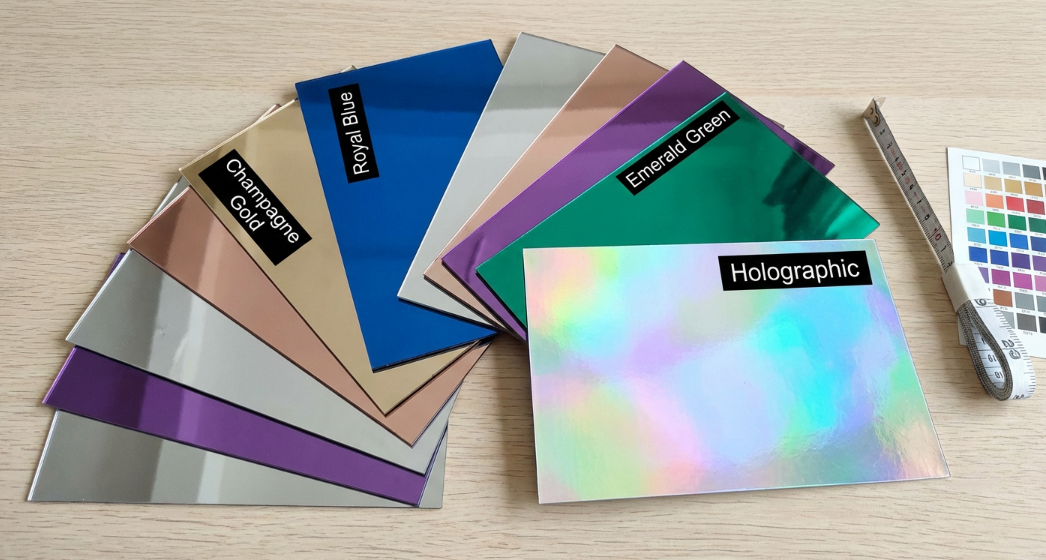
When I consult with clients on visual merchandising, I often explain that "Mirror Ball" doesn't just mean Silver. The Chinese supply chain offers three distinct tiers of color customization:
Tier 1: The Standards (Stock) Silver and Gold are almost always kept in stock by manufacturers. These are the "safe" choices for quick turnaround orders.
Tier 2: The Premium Palette (Market Available) Most factories have access to a secondary range of pre-manufactured colored films. These include Rose Gold, Royal Blue, Emerald Green, Red, Purple, Black, and Iridescent (Holographic). These colors are popular for seasonal events (e.g., Red/Green for Christmas, Black for Halloween) and are generally available with a small lead time extension.
Tier 3: Brand Specific (Custom) For large-scale corporate activations, I often need to match a brand's specific identity. This is where I choose to customize inflatable mirror balls by requesting Pantone matching. While true Pantone matching on a mirror finish is chemically difficult (the reflective layer alters the pigment perception), top-tier manufacturers can achieve a 90%+ match. This level of customization transforms a generic prop into a bespoke branding asset.
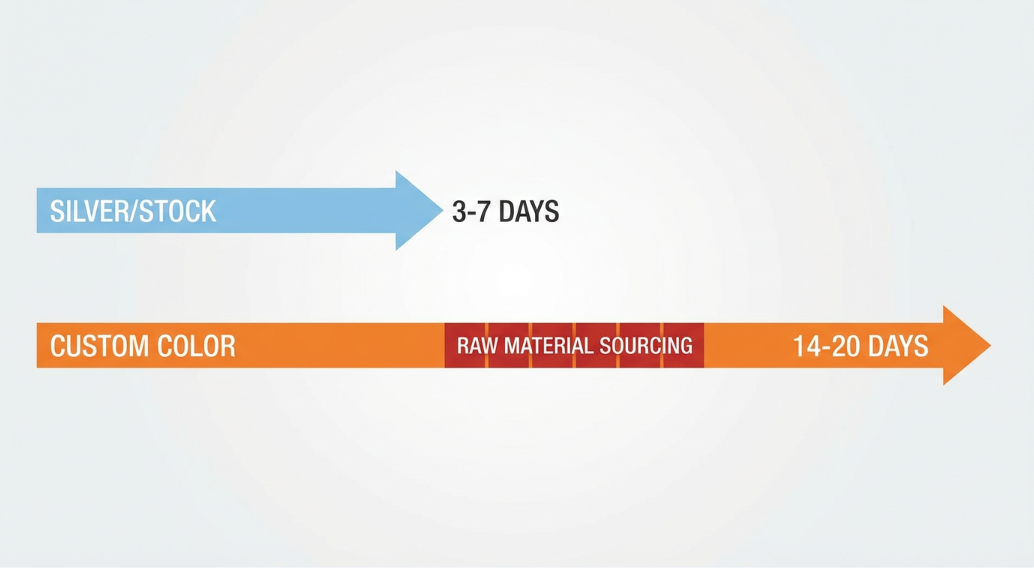
Yes, and ignoring this is a common logistical error. In the B2B world, time is money, and color choices directly impact the critical path.
Stock vs. Custom Timeline
The MOQ Factor Raw material suppliers often have a Minimum Order Quantity (MOQ) for colored films (e.g., 500 meters). If my order is too small to consume a full roll, the factory might refuse the order or charge a significant "setup fee" to cover the wasted material. I always clarify the MOQ for specific colors during the quotation phase to avoid surprises.
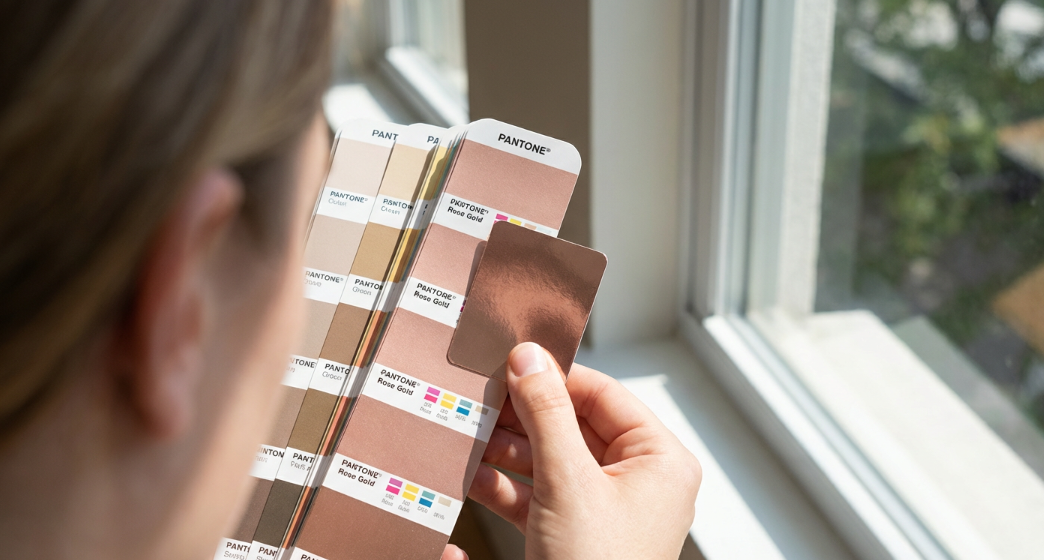
Verifying color is tricky because computer screens do not accurately render reflective surfaces. However, ordering a full-size custom sample is often cost-prohibitive due to the machine setup time.
The "Swatch Book" Strategy Instead of paying $100+ for a single sample ball, I request a Material Swatch Book. This is a physical collection of small cut-outs of the actual mirror film in every available color. It costs a fraction of the price and allows me to see exactly how the "Rose Gold" looks under my venue's lighting.
The "Pre-Production" Photo If a physical sample isn't possible due to time constraints, I insist on a "Pre-Production Sample" photo. I ask the factory to take a picture of the colored film roll next to a standard Pantone Color Chart under natural daylight. This gives me a reference point to judge the hue accuracy before they start cutting.
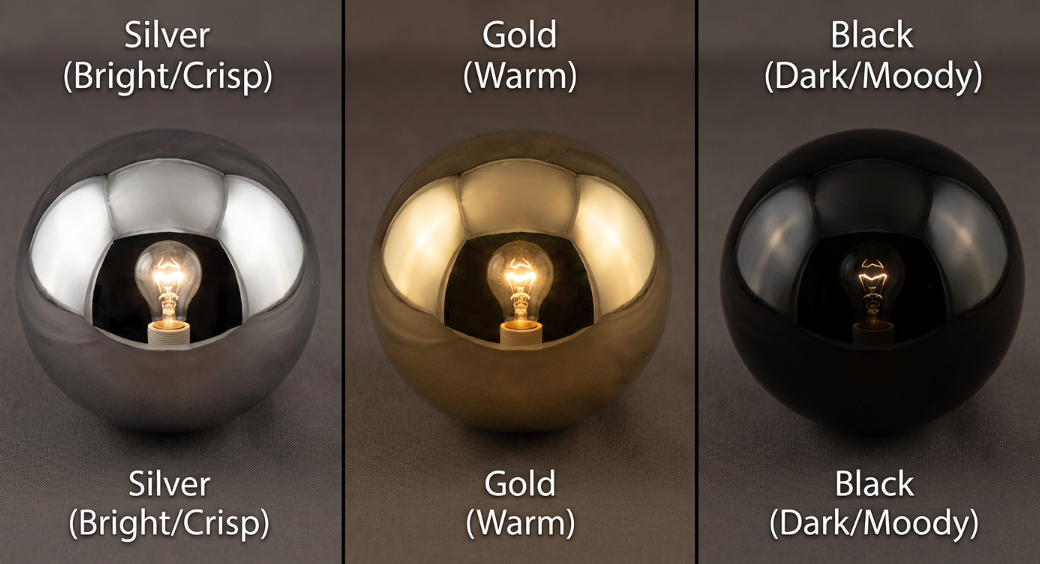
Not all mirror balls reflect light equally. The physics of the film changes with color, and this affects the final visual impact.
Reflectivity: Silver is King Silver offers the purest, most mirror-like reflection (closest to 100% reflectivity). It reflects the environment exactly as it is.
Absorption in Colored Films When you add color (pigment) to the film, you are essentially adding a filter.
Scratch Visibility I also advise clients that scratches are more visible on colored mirror balls. On a silver ball, a surface scratch reveals the greyish underlying PVC, which blends in. On a Black or Red mirror ball, a scratch breaks the color continuity and stands out starkly. Therefore, colored balls require more careful handling and "white glove" installation.
Customizing the color of your inflatable mirror balls is a powerful way to elevate a project from a standard decoration to a branded experience. However, it requires a trade-off between speed and aesthetics. If your deadline is tight, stick to Silver or Gold. If you have the lead time (3+ weeks) and the budget, a custom color like Iridescent or Rose Gold can provide that "wow" factor that B2B clients demand.
My advice: Start the conversation early, request a physical material swatch, and build that extra 10-day buffer into your project timeline.
Q1: Can I mix different colors in one order?
A: Yes, most factories allow you to split an order (e.g., 50 Gold, 50 Silver). However, if you want 10 different custom colors for a small order, you may face MOQ issues for each specific color film.
Q2: Is the Iridescent (Holographic) finish more expensive?
A: Yes, typically 10–15% more expensive than standard Silver. The manufacturing process for holographic film is more complex, and the material itself is costlier.
Q3: Do colored mirror balls fade in the sun?
A: Yes. Colored pigments are sensitive to UV radiation. A Red mirror ball left in direct sunlight for a month will eventually fade to a pale pinkish-silver. For outdoor use, ask for UV-resistant film, though even that only delays the fading.
Q4: Can I get a matte finish instead of a mirror finish?
A: Yes, some manufacturers offer "Matte Metallic" finishes. These are less reflective but offer a very modern, sophisticated look that doesn't show fingerprints as easily as the high-gloss mirror versions.


![What Is an Air Track in Gymnastics? [Complete Guide]](http://ueeshop.ly200-cdn.com/u_file/UPBF/UPBF509/2605/13/photo/WhatIsanAirTrackinGymnastics.png)


