If you get duties, taxes, and paperwork wrong, your shipment can be delayed, cost more than expected, or even be returned. The good news: with the right HS code, a clean documents pack, and a clear cost formula, you can predict your landed cost and clear customs smoothly. If you also need tailored sizes or finishes, see customize inflatable mirror balls.
Table of Contents
- What is the typical import duty for inflatable mirror balls?
- Can I get a breakdown of all applicable taxes?
- Should I hire a customs broker to handle the paperwork?
- How long does it take for customs clearance?
- Conclusion
- References
What is the typical import duty for inflatable mirror balls?
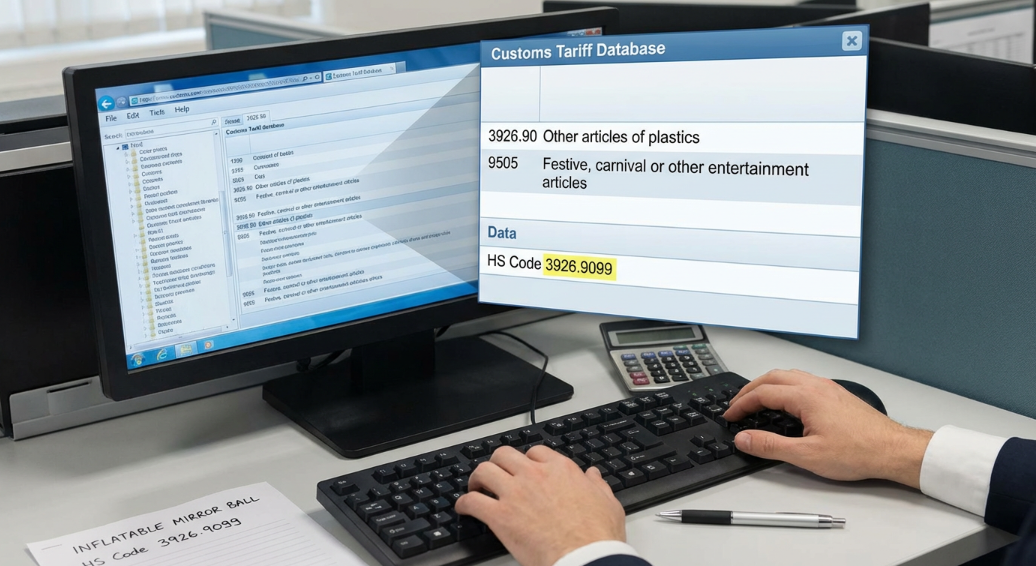
The duty rate depends on the HS/HTS classification and your destination market. Inflatable mirror balls used for decor are commonly classified under plastics “other articles” (e.g., HS 3926.90), but some products may fall into festive/party decorations (e.g., HS 9505) depending on materials, intended use, and product presentation. Always confirm classification with your broker or request a ruling before shipment to avoid reclassification at the border[1][2][3][4].
Typical outcomes by market (indicative, verify before booking):
- United States: MFN duty often in the low single digits to mid-single digits depending on the final 10-digit HTS. Some plastics articles from China may also attract additional Section 301 duties (up to 25%) if listed[1][2].
- European Union (TARIC): Many 3926.90 articles carry mid-single-digit duty; confirm CN subheading and duty in TARIC[3].
- United Kingdom: Similar approach to EU; verify the UK Global Tariff for the exact subheading[4].
- Canada: Check CBSA Customs Tariff; 3926.90 lines often carry MFN in the mid-single digits[5].
- Australia: Base tariff for many plastics articles is around 5%, but check the specific subheading in the ABF tariff[6].
Best practice:
- Ask your supplier for full specs (material, wall thickness, intended use, product photos).
- Share these with your broker to confirm the HS code and any additional measures (e.g., Section 301, anti-dumping if any).
- Keep the HS code consistent on PI, CI, PL, and bill of lading.
Can I get a breakdown of all applicable taxes?
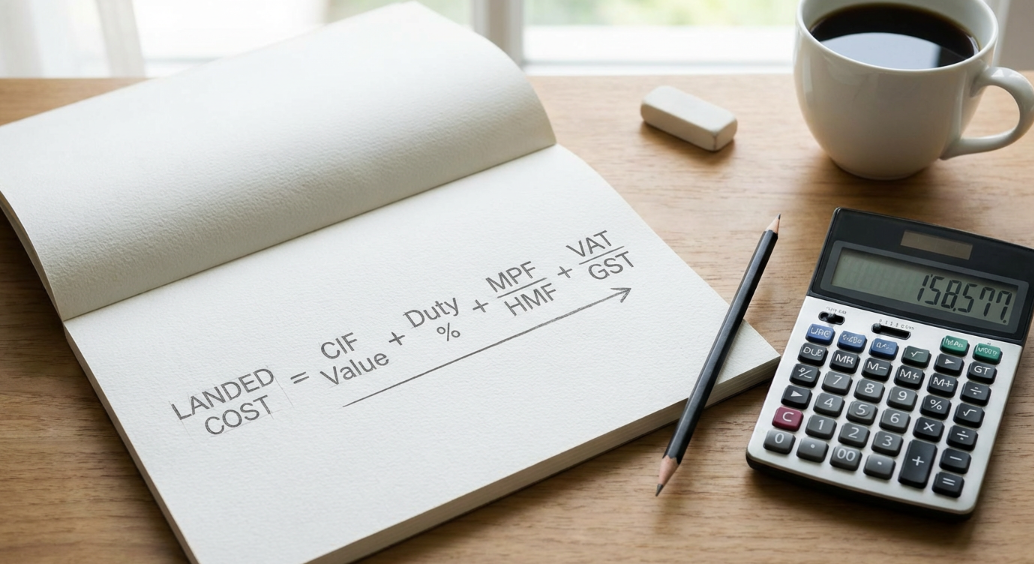
Yes—here’s a practical checklist you can reuse on every shipment. Replace the percentages with the current rates from your market’s tariff tool.
Core components by market:
- United States[1][7][8]
- Import duty: HTS rate × customs value (usually CIF).
- Section 301 (if applicable)[2].
- MPF: 0.3464% of customs value (min and max apply)[7].
- HMF: 0.125% for ocean entries (not for air)[8].
- No federal VAT; state sales/use tax may apply post-import (varies).
- European Union[3][9]
- Import duty: TARIC rate × customs value.
- Import VAT: local VAT rate (e.g., DE 19%, FR 20%) applied on (CIF + duty + certain fees)[9].
- United Kingdom[4][10]
- Import duty: UK Global Tariff × customs value.
- Import VAT: typically 20% (standard rate) on (CIF + duty + fees)[10].
- Canada[5][11]
- Import duty: MFN rate × customs value.
- GST: 5% on (CIF + duty); HST/PST may apply by province[11].
- Australia[6][12]
- Import duty: tariff rate × customs value.
- GST: 10% on (CIF + duty + import processing & transport components)[12].
Reusable landed-cost formula (template):
- Landed Cost = CIF × (1 + duty% + additional%) + fixed fees + VAT/GST (where applicable)
- Additional% could include measures like Section 301 (US).
- Fixed fees include brokerage, customs processing, local terminal/wharf charges, delivery.
Pro tip: Ask your broker/forwarder for a pro forma entry sheet before cargo ready date—so you can lock pricing for your customer without surprises.
Should I hire a customs broker to handle the paperwork?

When a broker is worth it:
- First-time import or first shipment with a new product (classification risk).
- Tight timelines (event date or seasonal launch).
- Multi-country deliveries or complex tax/VAT setups.
- You’re shipping under FOB/CIF and need help coordinating entry and delivery to door.
What a broker typically handles:
- HS classification validation and entry filing
- Duty/tax calculation, MPF/HMF (US), VAT/GST (EU/UK/CA/AU) setup
- Document checks (CI, PL, BL/AWB), power of attorney, bonds (US)
- Liaison with customs on exams/queries, release, and delivery order
If your supplier offers DDP:
- DDP can simplify your life, but confirm what’s included (duty, VAT, brokerage, delivery) and ask for proof of legal import/entry in your name if you need to reclaim VAT. DDP done incorrectly can create tax and warranty headaches. Use Incoterms precisely[13].
How long does it take for customs clearance?
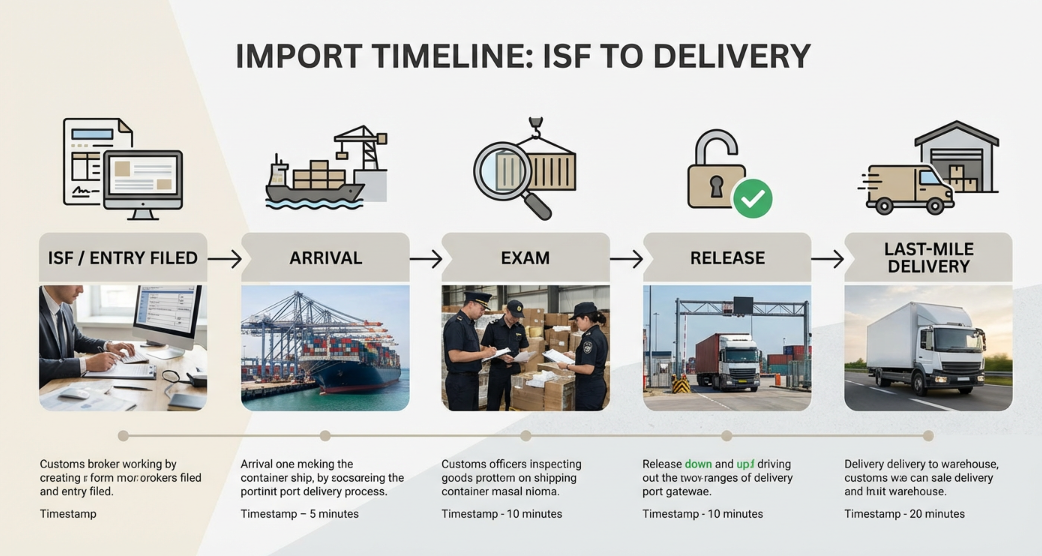
Indicative timelines (assuming documents are clean and classification is agreed):
- Air freight: typically 1–3 business days from arrival to release.
- Ocean freight: typically 3–7 business days from availability to release (port congestion can extend this).
- Exams or documentation queries can add 1–7+ days depending on the market.
What speeds things up:
- United States: File ISF 24 hours before vessel loading (for ocean), accurate HTS, bond in place, commercial invoice with HS and terms, and pre‑file entry where possible[14].
- EU/UK/CA/AU: Submit complete data set early (EORI/VAT, importer details, HS, values, incoterms), ensure your VAT setup (deferment/PP) is ready, and pay duties promptly through the broker’s account.
Checklist to avoid delays:
- One HS code consistently across PI/CI/PL and on the entry.
- Product description matches HS notes (material, use).
- Values match payment docs; incoterms clearly stated.
- Power of attorney/bond/eORI/VAT numbers active and correct.
Conclusion
You can make duties and taxes predictable by locking three things before production ends: HS classification, landed-cost formula, and the filing plan (broker vs. in‑house). For most importers, a broker and a pre‑entry estimate remove 90% of the risk. If you also need tailored sizes, colors, or finishes, consider customize inflatable mirror balls to align product specs with your compliance plan.
References
[1] USITC HTS Search (HTSUS)
https://hts.usitc.gov/
[2] USTR Section 301 China Tariffs (Lists and Annexes)
https://ustr.gov/issue-areas/enforcement/section-301-investigations/tariff-actions
[3] EU TARIC Consultation (CN codes, duties, measures)
https://ec.europa.eu/taxation_customs/dds2/taric/taric_consultation.jsp
[4] UK Trade Tariff (Find commodity codes)
https://www.gov.uk/trade-tariff
[5] Canada Customs Tariff / CBSA
https://www.cbsa-asfc.gc.ca/trade-commerce/tariff-tarif/menu-eng.html
[6] Australian Border Force Tariff
https://www.abf.gov.au/importing-exporting-and-manufacturing/tariff-classification/current-tariff-classification
[7] CBP Merchandise Processing Fee (MPF)
https://www.cbp.gov/trade/entry-summary/merchandise-processing-fees
[8] CBP Harbor Maintenance Fee (HMF)
https://www.cbp.gov/trade/entry-summary/harbor-maintenance-fee
[9] European Commission — VAT Rates in EU
https://taxation-customs.ec.europa.eu/taxation-1/value-added-tax-vat/vat-rates_en
[10] HMRC — VAT Rates
https://www.gov.uk/vat-rates
[11] Government of Canada — GST/HST
https://www.canada.ca/en/revenue-agency/services/tax/businesses/topics/gst-hst.html
[12] Australian Taxation Office — GST on Imports
https://www.ato.gov.au/Business/International-tax-for-business/GST-on-imported-goods/
[13] ICC — Incoterms
https://iccwbo.org/resources-for-business/incoterms-rules/
[14] CBP — Importer Security Filing (ISF)
https://www.cbp.gov/border-security/ports-entry/cargo-security/importer-security-filing-isf


![What Is an Air Track in Gymnastics? [Complete Guide]](http://ueeshop.ly200-cdn.com/u_file/UPBF/UPBF509/2605/13/photo/WhatIsanAirTrackinGymnastics.png)


