To address issues with inflatable gymnastics mats during use, the first step is accurate troubleshooting. Most air loss is caused by a loose valve, which can be fixed in seconds with a valve wrench. For punctures, use the repair kit provided by the manufacturer to apply a PVC patch using polyurethane glue (like HH-66). To prevent premature wear, ensure mats are cleaned regularly, stored in a dry, cool place away from direct sunlight (UV radiation), and never dragged across rough surfaces like concrete.
Table of Contents
How can I troubleshoot issues with inflatable mats after use?
Not every "soft" mat has a puncture. Air temperature changes and valve mechanics are often the culprits.
The Diagnostic Workflow
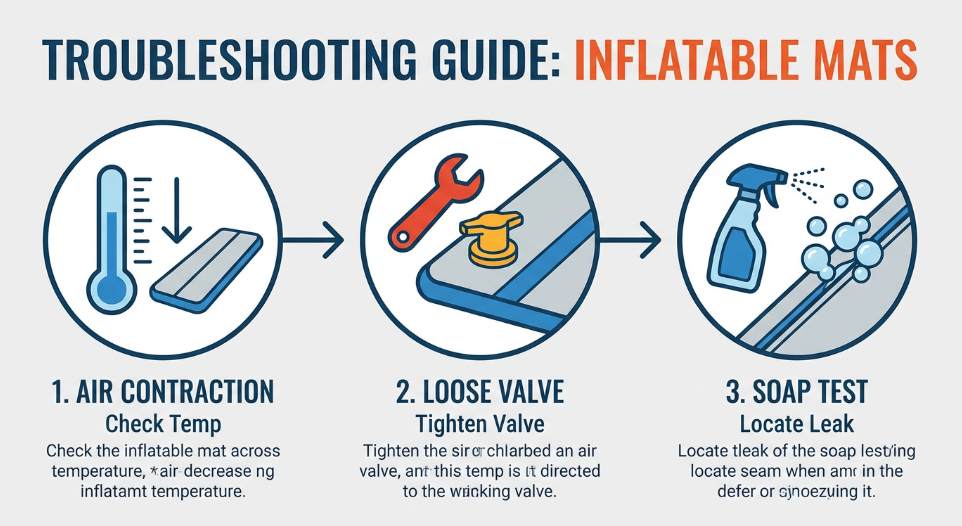
- Check the Environment:
- Scenario: You inflated the mat in the hot afternoon, and now it’s cool in the morning.
- Diagnosis: Physics, not a leak. Air contracts when cold. Simply add more air.
- The Valve Check (Most Common):
- 90% of "leaks" are actually air escaping from around the valve because it vibrated loose during transport or use.
- *TestTest: Spray soapy water around the valve. If it bubbles, it just needs tightening.
- The Soap Sweep:
- If the valve is tight, inflate the mat fully. Spray soapy water over the surface, focusing on the seams and corners. Look for growing bubbles.
How do I repair inflatable mats if they start leaking?
Repairing a Drop Stitch mat is similar to repairing a PVC raft. It is a simple skill that every gym owner should master.
Repairing a Loose Valve
- Take the Valve Wrench (orange/grey tool in your repair kit).
- Insert it into the valve while the mat is deflated.
- Twist clockwise until tight. Do not overtighten.
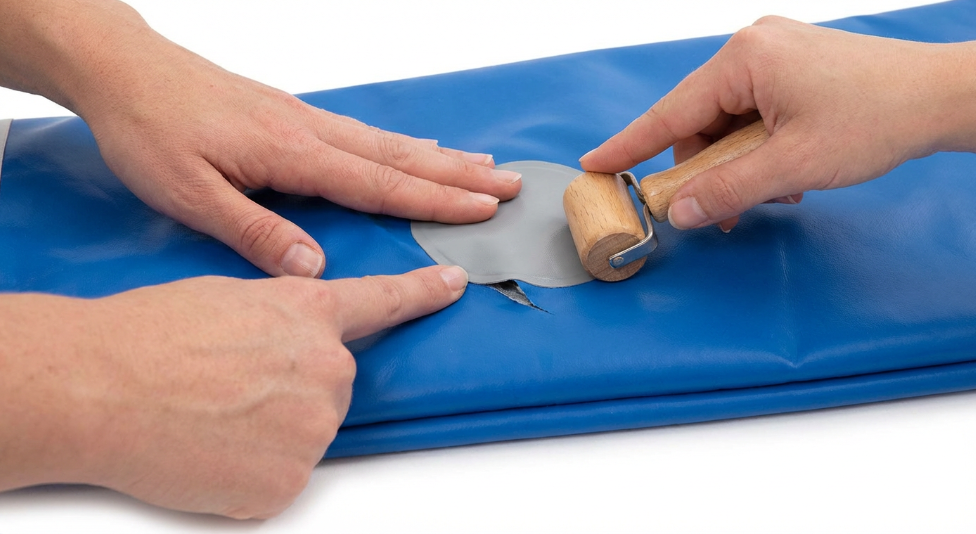
Repairing a Puncture (Patching)
- Clean: Wipe the area with alcohol/acetone to remove grease.
- Cut: Cut a round PVC patch (from the repair kit). Never use square corners; they peel up easily.
- Glue: Apply a thin layer of PVC glue (polyurethane adhesive) to both the mat and the patch.
- Wait: Let the glue dry until "tacky" (about 3-5 minutes).
- Press: Apply the patch and press down hard. Use a spoon or roller to push out air bubbles.
- Cure: Wait 24 hours before inflating.
What should I do if the mats wear out prematurely?
If a mat degrades in 6 months, you need to identify if it's a quality issue or a usage issue.
Identifying the Cause
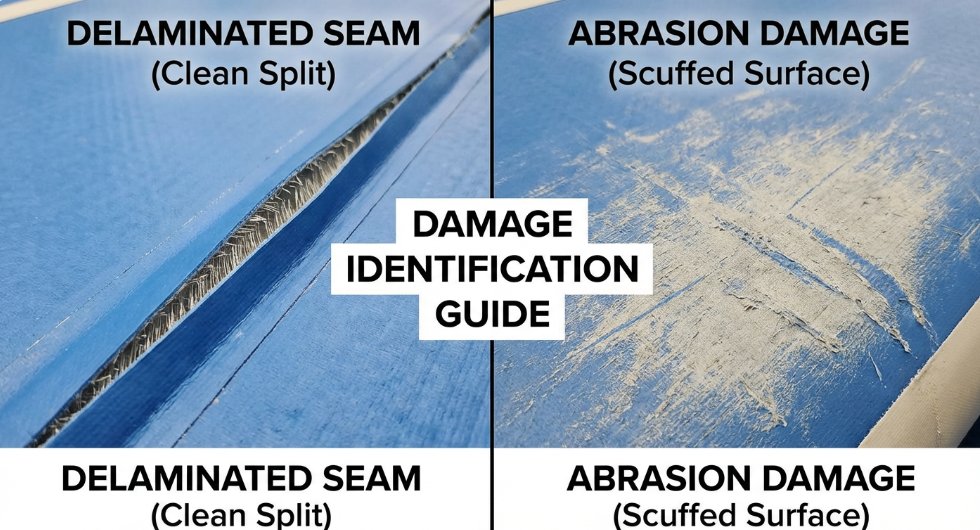
- UV Damage (Usage): Is the mat sticky, faded, or brittle? This means it was left in the sun. This is not covered by warranty.
- Delamination (Quality): Are the layers peeling apart at the seams without any external damage? This is a glue failure or manufacturing defect. Contact your supplier for a warranty claim.
- Abrasion (Usage): Are there scratch marks or holes on the bottom? This comes from dragging the mat on concrete or floorboards.
Action Plan
If it is delamination, take photos and claim your warranty credit. If it is abrasion/UV damage, apply a large reinforcement patch (or "wear strip") over the damaged area to salvage the mat.
How can I extend the life of inflatable mats during use?
Maintenance is the difference between a mat that lasts 2 years and one that lasts 7 years.
The Golden Rules of Maintenance
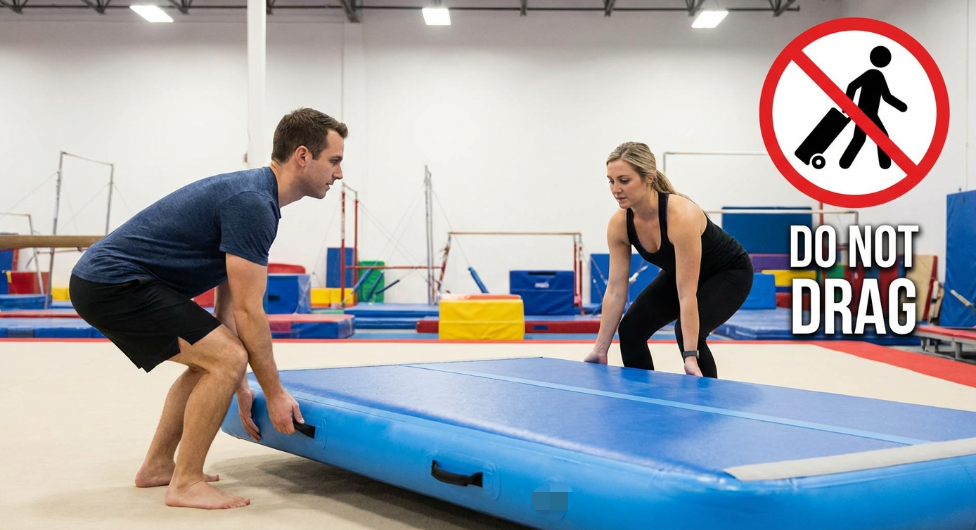
- Lift, Don't Drag: The #1 killer of mats is dragging them by the handles. The friction burns holes in the bottom PVC. Always carry it with two people or use a trolley.
- Regulate Pressure: If using the mat outdoors, deflate it slightly when not in use. As the sun heats the air inside, pressure rises. If it’s already full, the heat can cause it to explode (blow out the seams).
- Clean Before Storage: Sweat and chalk are corrosive. Wipe the mat down with mild soap and water. Dry it completely before rolling. Moisture inside the roll causes mold, which rots the internal threads.
- Use a Ground Sheet: Always put a tarp or foam puzzle mats underneath the Air Track to protect it from dust, rocks, and friction.
Conclusion
Addressing issues with inflatable mats is mostly about education.
- Educate your staff: Teach them to check valves and lift mats properly.
- Educate your customers: If you resell, provide them with a "Care Guide" so they don't leave the mat in the sun.
- **Prepare forPrepare for repairs: Keep a stock of PVC patches and high-quality glue (like Clifton or HH-66) on hand.
By being proactive with maintenance, you minimize downtime and maximize the value of your imported equipment.
We provide a comprehensive Maintenance Guide and a Pro Repair Kit with every bulk order to ensure your customers have everything they need for long-term success.
Order Durable, Easy-to-Maintain Mats https://aftersea.net/pages/customize-air-tracks
References
-
NRS – How to Repair PVC Inflatables
https://www.nrs.com/learn/repair-pvc-and-urethane-boats
-
HH-66 Vinyl Cement – Technical Data Sheet (Industry Standard Glue)
https://www.rholden.com/


