To address product issues with inflatable gymnastics mats from China, you must act quickly and gather evidence. First, document the defect with clear photos and video showing the leak or damage. Second, notify the supplier immediately (within the warranty window) using formal communication channels like email or WeChat. For minor issues like small punctures, request a repair kit or spare parts. For major manufacturing defects (seam failure), reference your contract terms to negotiate a replacement in the next shipment or a partial refund. Prevention via pre-shipment inspections is always more effective than post-delivery dispute resolution.
Table of Contents
What’s the process for resolving product defects or issues?
When you discover a defect (e.g., a mat losing air, a broken valve, or peeling glue), panic is your enemy. A systematic approach ensures the best outcome.
The Defect Resolution Workflow
- Categorize the Issue:
- Minor (Fixable): Pinhole leak, loose valve, cosmetic scuff. Solution: Repair locally.
- Major (Structural): Seam bursting, twisted drop stitch (bulging), wrong dimensions. Solution: Replacement/Refund.
- Evidence Collection:
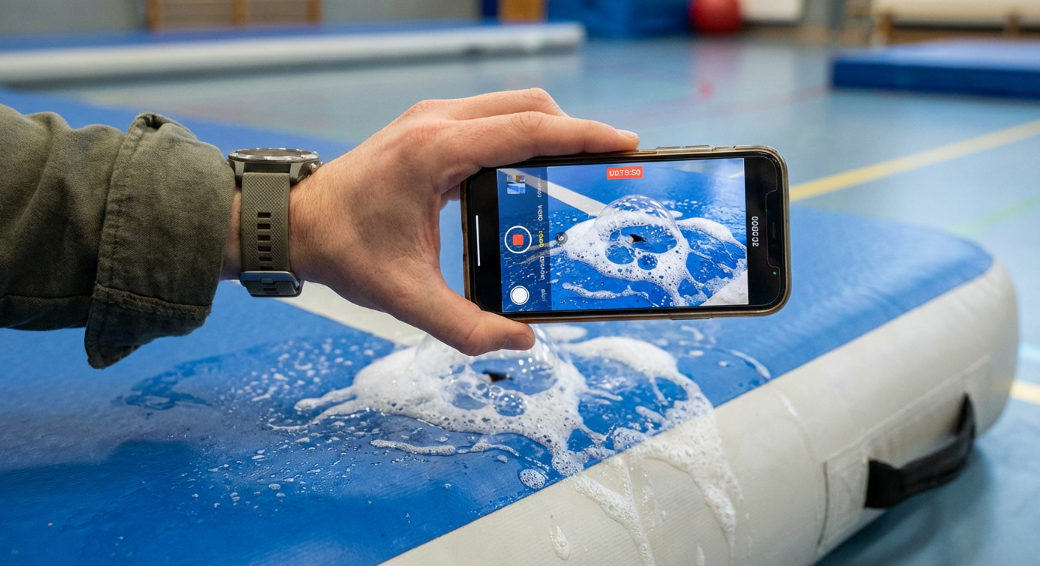
- Inflate the mat and spray soapy water to find the leak.
- Video: Record a continuous video showing the mat serial number, the defect, and the soap bubbles forming.
- Submit Claim: Send the evidence to the supplier.
- Negotiate Solution:
- Option A: Supplier sends free spare parts (valves, PVC) + cash for local repair labor.
- Option B: Supplier deducts the value from your next order.
- Option C: Supplier ships a free replacement unit in the next container.
Note: Returning heavy inflatable mats to China is almost never financially viable due to shipping costs and import duties.
How do I communicate with the supplier about product issues?
Cultural nuances and language barriers can escalate a simple problem into a fight.
Effective Communication Strategies
- Be Factual, Not Emotional: Avoid accusations like "You scammed me!" Instead, say, "We received Order #123. 5 units have valve leaks. Please see the attached video."
- Use Visuals: Annotate photos with arrows and circles. A picture crosses the language barrier instantly.
- Reference the Contract: Remind them of the agreed-upon quality standards (e.g., "The contract states 0.9mm PVC, but this measures 0.7mm").
- Propose a Solution: Don't just complain; ask for what you want. "To resolve this, we request a credit of $500 on the next invoice."
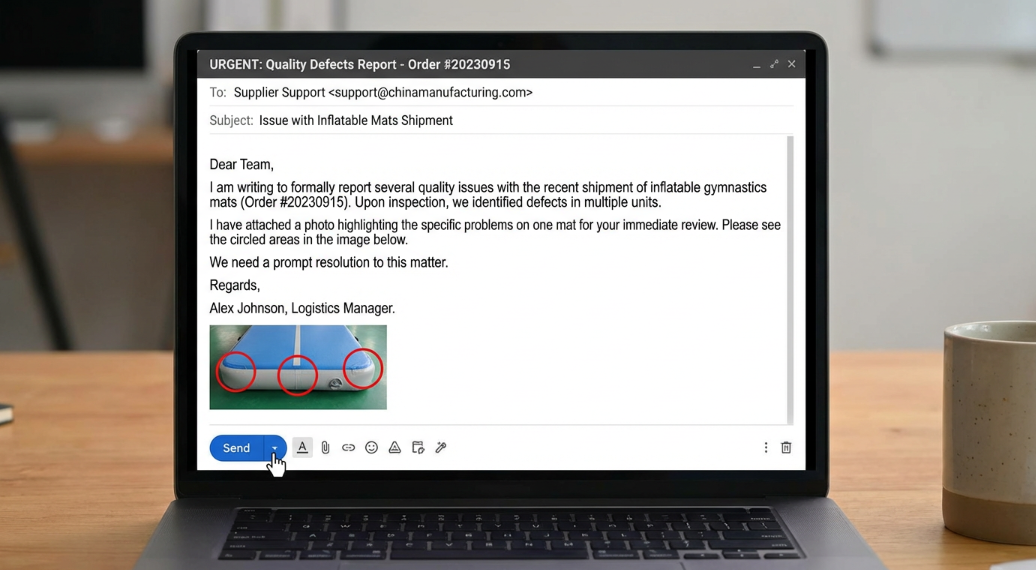
Image Prompt: A screenshot of a professional email draft to a supplier, with an attached photo showing red circles around product defects
SEO Alt: email template for supplier complaint Title: communicating defects to suppliers Caption: Clear, visual communication helps suppliers understand and fix the issue faster
How do I handle warranty claims for inflatable mats?
A warranty is only as good as the supplier standing behind it. Most Chinese B2B warranties are "Spare Parts Warranties."
Understanding B2B Warranties vs. Consumer Warranties
- Consumer Expectation: "I send it back, you fix it."
- B2B Reality: "We send you the parts, you fix it."
The Claim Process
- Check the Timeline: Most warranties cover 1–2 years. Claims must be made immediately upon discovery.
- Define Liability: If the mat leaked because a customer dragged it on concrete, that is user error, not a warranty claim. If the seam split spontaneously, that is a manufacturing defect.
- Settlement: For confirmed defects, the most common resolution is credit notes. Reputable suppliers will not argue over $50 in parts if they want to keep your $50,000 business.

How do I avoid potential product issues during importation?
The only way to win a dispute is to prevent it from happening. Once the goods leave China, your leverage drops significantly.
Prevention Checklist
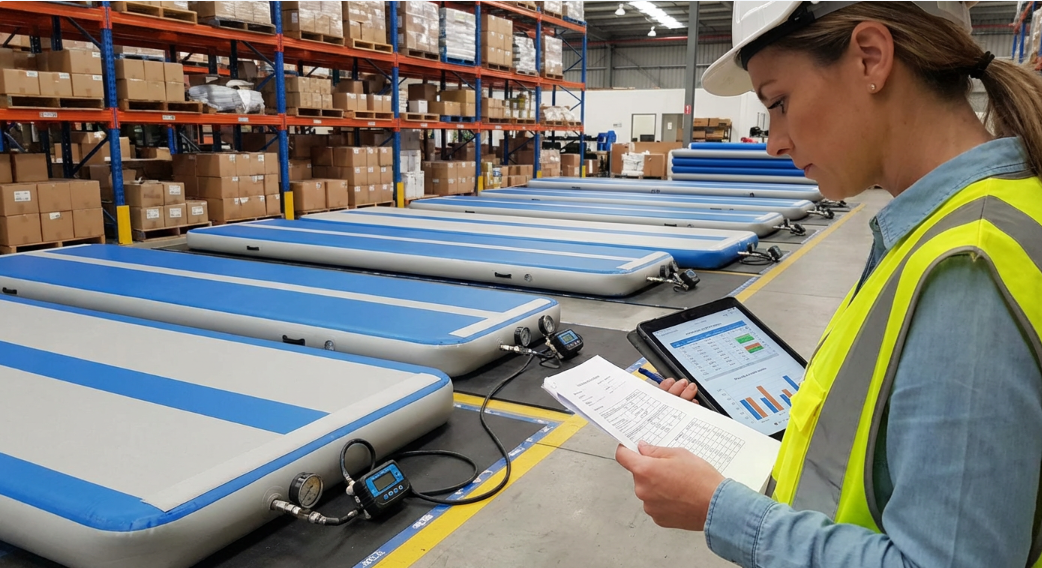
- Pre-Shipment Inspection (PSI): Hire a third-party inspector to perform a 24-hour inflation test at the factory. If the mats leak there, they don't get on the ship.
- Clear Specifications: Your contract must list tolerances. "Thickness must be 20cm +/- 0.5cm." Without this, a 19cm mat is not "defective," it's just "close enough."
- Golden Sample: Keep a perfect sample from a previous batch. If the new batch feels different, you have a physical benchmark to compare against.
- Packaging Specs: Many "defects" are actually shipping damage. Require 7-layer cartons and palletization to prevent punctures during transit.
Conclusion
Addressing product issues is part of the importer's job description.
- React Fast: Document defects immediately.
- Be Professional: Use video evidence and clear data.
- Focus on Credit: Seek compensation via future order credits or free replacements rather than demanding cash refunds.
- Inspect First: The best way to handle a defect is to catch it while it is still in the factory.
By establishing a clear protocol, you turn a potential crisis into a manageable operational task.
We stand behind our quality with a comprehensive 2-Year Warranty and a transparent claims process. Our rigorous QC ensures you rarely need to use it.
Read Our Quality Guarantee
https://aftersea.net/pages/customize-air-tracks
References
-
Quality Control in China – Handling Defective Products
https://www.qualitycontrolchina.com/
-
China Law Blog – Manufacturing Contracts and Warranties
https://www.chinalawblog.com/


![What Is an Air Track in Gymnastics? [Complete Guide]](http://ueeshop.ly200-cdn.com/u_file/UPBF/UPBF509/2605/13/photo/WhatIsanAirTrackinGymnastics.png)


