Common misspellings like "Air Trak" and "Air Trac" often lead buyers to incomplete or low-quality suppliers. For B2B procurement, using the correct term "Air Track" is crucial for finding manufacturers that offer commercial-grade quality, safety certifications, and reliable bulk supply. This guide ensures you source the right product, regardless of the spelling variant.
Table of Content:
Decoding the Market: What You're Actually Finding with "Air Trak" and "Air Trac"
The B2B Procurement Checklist: From Search Query to Reliable Supplier
From Search to Solution: Partnering with an Expert Manufacturer
n the high-stakes world of B2B procurement, where decisions impact athlete safety, operational budgets, and brand reputation, we often overlook the simplest of starting points: the search bar. I've witnessed countless facility managers and purchasing agents begin their sourcing journey with a simple typo—"air trak" or "air trac"—only to find themselves navigating a landscape of consumer-grade products and unreliable sellers. This initial misstep is far from trivial; it's a critical filter that often separates professional suppliers from those unable to meet the demands of a commercial facility. The few seconds saved by a quick, misspelled search can lead to hours of wasted time sifting through inadequate options, not to mention the profound risk of investing in equipment that fails to meet basic safety and durability standards. Your search term is the first gatekeeper to quality, and understanding this dynamic is the first step in a smarter, more effective procurement strategy.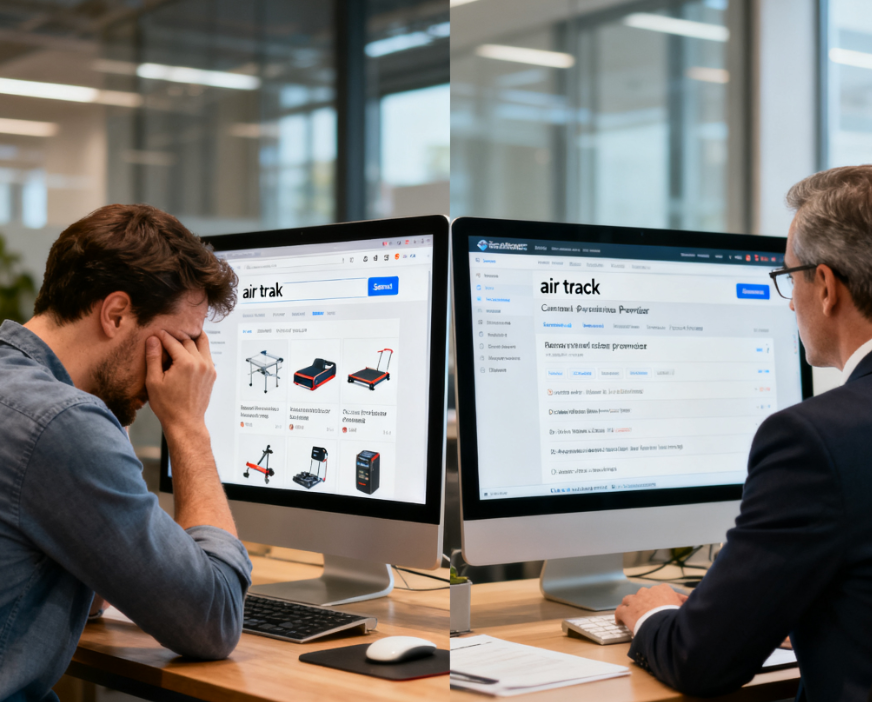
You might wonder if a simple spelling correction can truly make a difference in your procurement outcomes. Let me be direct: it absolutely can. Think of "Air Track" not just as the correct term, but as a keyword that unlocks a tier of suppliers who understand your business needs. When you search using the industry-standard terminology, you effectively filter out the noise and connect with manufacturers who speak the language of professional gymnastics and training facilities.
Searching for "air trak" or "air trac" often leads you to marketplaces and sellers targeting individual consumers. These suppliers are optimized for single-unit sales and low price points, not for the rigorous demands of daily commercial use. In contrast, manufacturers who optimize their content for "Air Track" are typically those who invest in proper technical documentation, understand international safety standards like EN 12503 and ASTM, and have the production capacity to handle consistent bulk orders. They are more likely to provide the technical data sheets, material certifications, and ODM/OEM flexibility that are essential for a B2B purchasing decision.
This isn't just about semantics; it's about signaling. Using the correct terminology signals that you are a professional buyer, which in turn attracts professional suppliers. It's the difference between a supplier who asks, "How many do you need?" and one who asks, "What is your required PSI, material thickness, and expected daily usage?" This shift in conversation is critical for ensuring the equipment you procure meets the safety and durability standards your facility requires.
Now, let's examine what you might be missing—or what risks you might be encountering—when your search begins with a misspelling.
When your search begins with a misspelling like "air trak" or "air trac", you are often inadvertently filtering for the wrong kind of supplier. Let's decode the typical profile of suppliers who appear in these searches but lack the correct terminology in their core marketing. Understanding this landscape is crucial for risk mitigation.
Suppliers who primarily target misspelled searches are often resellers of consumer-grade products. The equipment you find may look similar in pictures, but the reality is different. These products are typically constructed with lighter-weight, lower-grade PVC that cannot withstand the daily impact and abrasion of a commercial setting. The seams are often heat-sealed instead of high-frequency welded, creating a critical point of failure. For a business, this translates into a product with a drastically shortened lifespan, leading to frequent replacements and a much higher Total Cost of Ownership, negating any perceived initial savings.
A professional air track supplier prioritizes safety and can provide the documentation to prove it. When you search for "air trac", the results are far less likely to include suppliers with verifiable international safety certifications (like SGS or CE). This isn't a coincidence. These certifications require rigorous testing of materials and construction—a process that professional, correctly-labeled manufacturers undergo. Procuring equipment without these verifications exposes your facility to significant liability and athlete safety risks.
Perhaps the most limiting factor is the lack of scalability and flexibility. A supplier found via "air trak" is likely a distributor, not a manufacturer. They will not offer ODM or OEM services. This means you cannot customize air tracks for your specific facility layout, branding, or unique training requirements. They operate on a "what you see is what you get" model, which is insufficient for a business looking to optimize its operations and create a unique market position. You are limited to their standard inventory, which is unlikely to align perfectly with your professional needs.
Now that the risks are clear, let's build a proactive framework to ensure your procurement process leads to a successful, high-value investment.
Armed with the correct terminology and an understanding of the risks, you can now transform your procurement process from a guessing game into a strategic, results-driven operation. This checklist is designed to guide you from the moment you type "Air Track" into the search bar to the point of engaging with a qualified supplier.
Your first impressions are critical. When you land on a potential supplier's site, look for these immediate indicators of a B2B-focused partner:
Business Licenses and Certifications: Are they clearly displayed? A professional manufacturer is proud of their credentials.
"About Us" / "Our Factory": Do they show their production facility, equipment, and team? Transparency is a hallmark of legitimacy.
Client Case Studies: Do they showcase business clients, such as gyms, schools, or distributors? This demonstrates experience with your scale of needs.
Once a supplier passes the initial vetting, initiate a conversation to assess their capabilities deeply. Your first email should go beyond asking for a price.
Request a Technical Data Sheet: Ask for a detailed spec sheet for their standard commercial air track, including material thickness (e.g., 0.65mm PVC), weld type, and weight capacity.
Inquire About OEM/ODM Services: Ask, "Do you offer customization services such as custom sizes, colors, or logos?" This question alone will separate manufacturers from simple resellers. It opens the door to a conversation about how you can customize air tracks for your specific market.
Ask for a Sample Policy: A reputable supplier will have a clear process for sample orders. This is your most important step for quality verification.
Before placing a bulk order, you must validate their claims.
Test the Sample: Physically test the sample unit in your facility. Check the air retention over 48 hours, inspect the weld quality, and assess the overall durability of the material.
Clarify Logistics and Warranty: Understand the shipping process, Incoterms, and most importantly, the scope and duration of the commercial warranty. A 2-year warranty on a commercial product is a strong positive signal.
This checklist ensures that your search for a high-quality air track is systematic and focused on long-term value and partnership, not just the initial unit cost.
However, securing the right supplier is only part of the equation. The next step is to ensure the product itself delivers on its promises throughout its lifespan.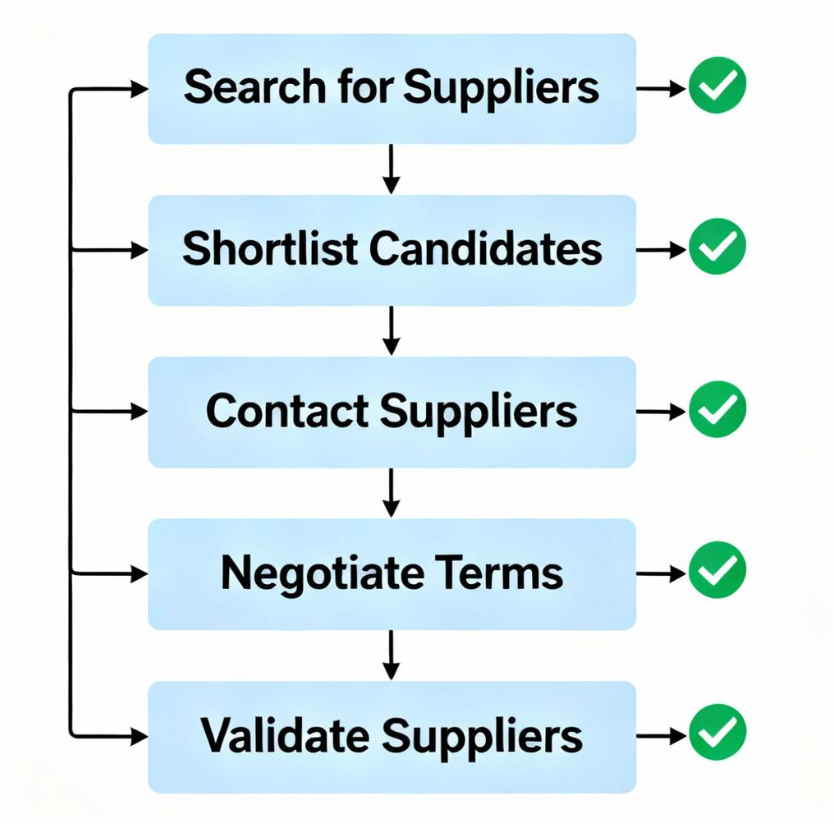
For a B2B buyer, the true cost of an air track is not its price tag, but its Total Cost of Ownership (TCO) over years of service. A low initial price means nothing if the product fails in six months, disrupting your operations and forcing a replacement purchase. Ensuring value requires a rigorous quality assurance process that protects your investment from the factory floor to your facility.
The sample you tested gave you a snapshot; the bulk order must match its quality consistently. Before production begins, confirm the Bill of Materials (BOM) with your supplier. Insist on the same commercial-grade PVC (e.g., 0.65mm) and high-frequency welding process for the entire order. Reputable manufacturers will provide a pre-production sample for final approval, allowing you to verify that the mass-produced unit is identical to your original approved sample. This step prevents the common bait-and-switch tactic where a high-quality sample is shown, but inferior materials are used in the bulk order.
Do not leave quality to chance. For a significant bulk order, you have the right to request inspections. This can be a third-party inspection service or, if you have a trusted relationship, detailed reports and videos from the manufacturer's own QC team. These inspections should verify:
Workmanship: Checking for consistent weld quality, proper glue application (if any), and clean finishing.
Material Consistency: Ensuring the PVC color, thickness, and texture are uniform across all units.
Functionality: Conducting air retention tests on a random selection of units from the production batch.
Packing: Confirming that the products are packed securely to withstand international shipping, preventing damage before they even reach you.
Professional procurement is documented procurement. Ensure your order is supported by:
A Commercial Invoice that accurately describes the goods and their value.
Packing List detailing the quantities and carton numbers.
Material Safety Certificates and test reports for the PVC used.
A Clear, Commercial Warranty Document that outlines the terms, conditions, and process for claims.
This documentation is not just for customs; it is your proof of compliance and your recourse should any issues arise. It formalizes the quality standards you have paid for.
Securing a high-quality, reliable product is the goal. The final step is transitioning from a successful transaction to a strategic partnership that can grow with your business.
The journey from a potentially misspelled search term to a successful procurement outcome culminates in one thing: partnership. While any supplier can transact, a true manufacturing partner understands that your success is intrinsically linked to theirs. They see beyond the single order to the long-term relationship, providing not just products, but solutions that help your business grow.
This is the fundamental difference between a vendor found through "air trak" and a partner optimized for "Air Track." A partner invests in the engineering and support capabilities that you, as a B2B buyer, require. They possess the R&D capacity to develop new products and the flexibility to adapt existing ones. This is where the ability to truly customize air tracks becomes a tangible business advantage, allowing you to create unique offerings for your market. A partner will work with you to refine your specifications, ensuring the final product—whether it's a custom size for an unusual space, a specific firmness for a discipline, or integrated branding—perfectly aligns with your operational goals.
The goal is to move from a reactive procurement cycle, where you are constantly searching and vetting, to a proactive supply chain strategy, where you have a reliable extension of your operations. This partnership provides consistency in quality, reliability in supply, and innovation in product development. It transforms your equipment sourcing from a recurring challenge into a competitive edge.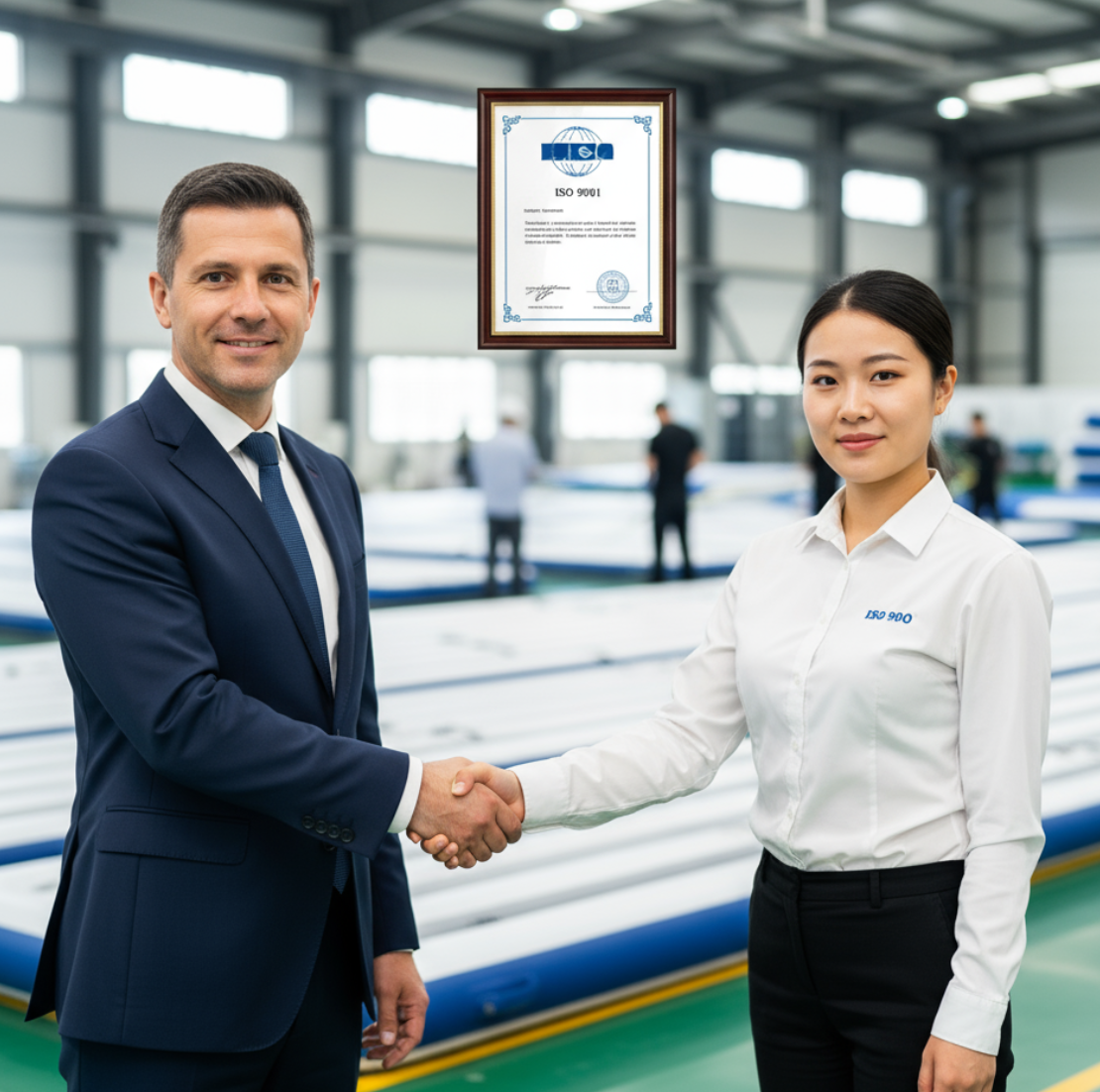
In B2B procurement, precision matters. From the words you type into a search bar to the technical specifications you require from a product, accuracy is the foundation of quality, safety, and value. We have seen how a simple misspelling like "air trac" can lead you down a path of unnecessary risk and inadequate solutions, while the correct term, "Air Track," opens the door to professional partnerships and commercial-grade equipment.
Your search strategy is the first and most critical filter in a successful procurement process. By applying the disciplined approach outlined in this guide—using the correct terminology, vetting suppliers against a rigorous checklist, and insisting on verifiable quality assurance—you ensure that your investment enhances your facility's safety, efficiency, and reputation.
Stop letting typos dictate your supply chain. Partner with a manufacturer who understands your professional needs from the very first search. Contact our team today to discuss your specific requirements and discover how our OEM expertise can bring your vision for premium air track equipment to life.
Q1: Does spelling really affect the quality of the supplier I find?
A: Absolutely. Spelling is a key indicator of a supplier's market focus. Manufacturers targeting B2B clients and investing in quality and safety standards optimize for the correct term "Air Track." Those found primarily through misspellings often cater to the consumer market, where standards and durability requirements are significantly lower.
Q2: What are the key differences between a consumer-grade and a commercial-grade air track?
A: The differences are substantial. A commercial-grade air track uses thicker, reinforced PVC (e.g., 0.65mm), features high-frequency welded seams for superior strength, includes heavy-duty valves, and comes with verifiable safety certifications. A consumer-grade product typically uses thinner material, heat-sealed seams, and lacks the durability for daily professional use.
Q3: Can I still get custom products if I initially searched for a misspelled term like "air trak"?
A: It is highly unlikely. Suppliers who target misspelled searches are typically resellers or small-scale producers without OEM/ODM capabilities. To access true customization—such as custom sizes, firmness levels, and integrated branding—you need to partner with a manufacturer who is found through the correct industry terminology and openly promotes their custom design services.
Q4: What is the typical minimum order quantity (MOQ) for a professional air track supplier?
A: MOQs vary but a professional manufacturer will typically have an MOQ for custom orders to make production feasible. This can range from 50 to 100 units for standardized customizations. They will often be flexible and work with you to define a feasible quantity, unlike a reseller who may only sell single units.


![What Is an Air Track in Gymnastics? [Complete Guide]](http://ueeshop.ly200-cdn.com/u_file/UPBF/UPBF509/2605/13/photo/WhatIsanAirTrackinGymnastics.png)


