A 20 ft air track provides the optimal balance of length for skill sequences, space efficiency, and athlete safety, making it the preferred choice for professional gyms, cheerleading studios, and martial arts dojos. Its ~6-meter length accommodates full run-ups and tumbling passes while fitting standard facility layouts, offering superior ROI for B2B buyers.
Table of Content:
Beyond the Tape Measure: The Tangible Benefits of a 20ft Airtrack
Technical Specifications: What to Look for in a Commercial 20 ft Air Track
The Procurement Blueprint: Sourcing Durable 20ft Airtrack Mats for Your Facility
Beyond Standard: When to Consider a Custom 20ft Air Track Solution
As a facility manager or head coach, your daily challenge is a constant balancing act. On one side, you have the imperative to provide a safe, progressive training environment where athletes can build complex tumbling sequences. On the other, you face the physical and financial reality of limited, valuable floor space. You've likely experienced the frustration of a mat that's too short, forcing athletes to compromise their form or abort a pass, thereby increasing the risk of injury. Conversely, you may have dealt with a mat that's excessively long, consuming a disproportionate amount of your gym's real estate and disrupting the flow of multiple training stations. This is the space-skill dilemma: the gap between the equipment you have and the training outcomes you need to deliver. It's a problem that directly impacts both athlete safety and your facility's operational efficiency. Standard, off-the-shelf solutions often fall short, leaving you to manage a compromise that affects your bottom line and your reputation.
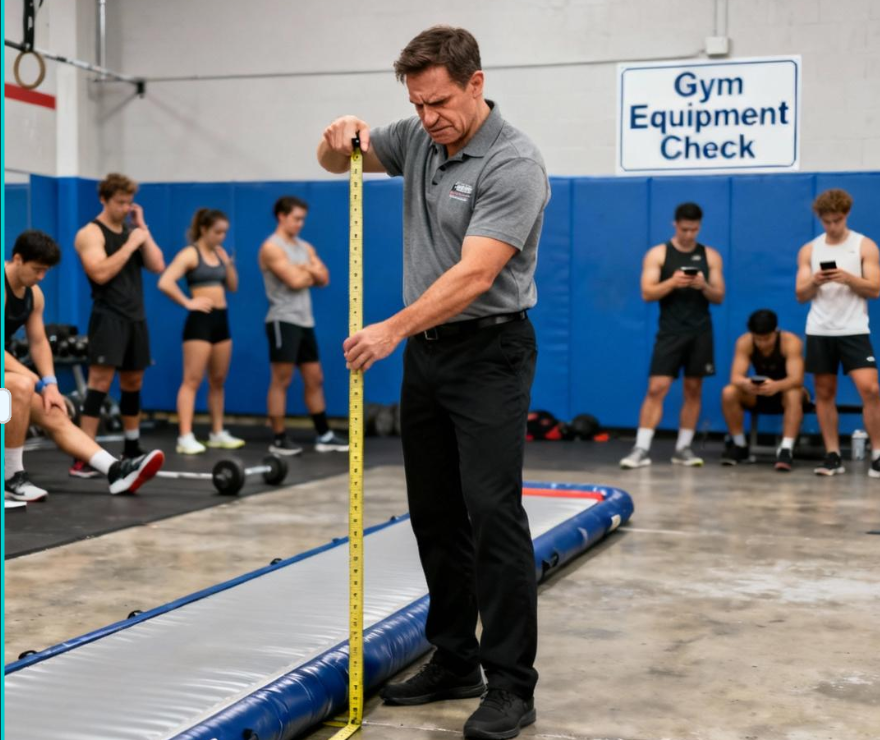
So, how do we solve this space-skill equation? Through years of collaboration with facilities like yours, a clear and consistent answer has emerged: the 20ft air track. This isn't an arbitrary length; it's a specification refined by the practical demands of professional training. It represents the sweet spot where athlete needs and facility management converge.
Think of a 20ft airtrack as a perfectly calibrated tool. Its approximately 6-meter length is engineered to accommodate the complete kinematics of a fundamental tumbling pass. It provides sufficient runway for a powerful hurdle and round-off, ample space for the critical back handspring, and a secure, generous landing area. This allows gymnasts, cheerleaders, and martial artists to execute skills with confidence, from foundational drills to more advanced sequences, without the spatial constraints of a shorter mat or the awkward, unused excess of a longer one.
Furthermore, this length demonstrates remarkable versatility in facility planning. A 20 ft air track can be positioned as a dedicated tumbling line, used as a high-impact landing station, or integrated into a larger obstacle course. It fits efficiently into standard bay sizes, allowing you to maximize your training floor's capacity without overcrowding. In essence, the 20ft airtrack has become the industry benchmark not by accident, but because it delivers a quantifiable performance envelope that directly addresses the core challenges of professional training environments.
But the benefits extend far beyond just its dimensions. Let's examine the tangible impact this specific equipment can have on your daily operations.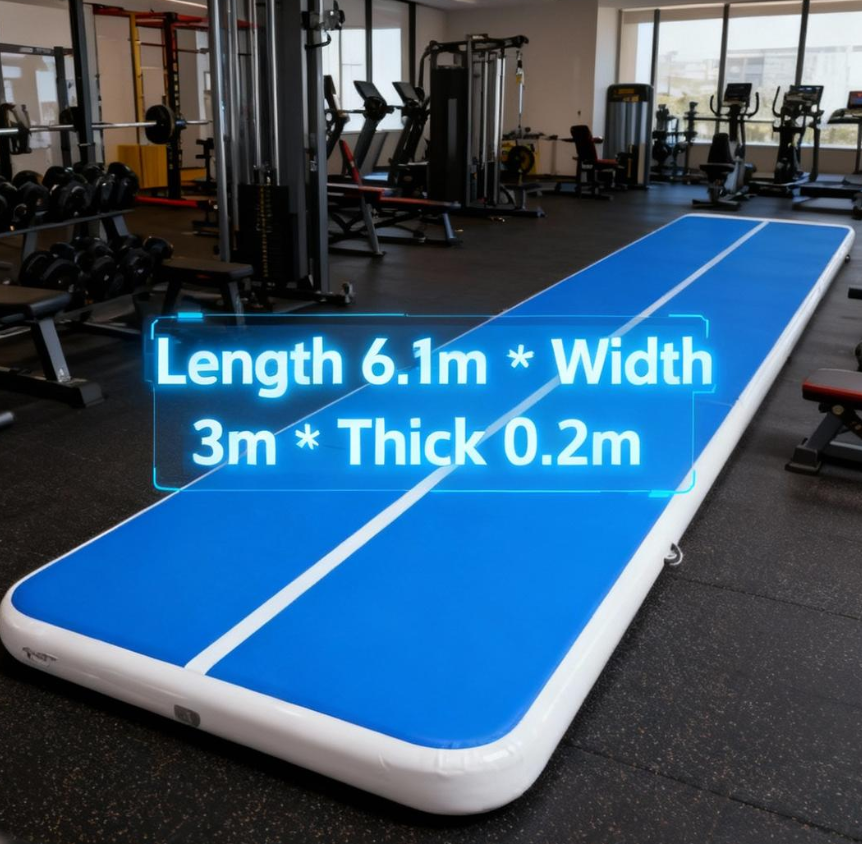
While the 6-meter length is the headline, the true value of a professional 20ft air track is measured in its direct impact on your facility's safety, operations, and financial performance. Let's move beyond the specifications and examine the tangible returns on this investment.
A 20ft airtrack provides the consistent, predictable surface required for progressive skill acquisition. Athletes can build muscle memory for complete sequences without adapting their approach or landing due to spatial constraints. This eliminates the dangerous practice of "cutting a pass short" or over-rotating to fit a smaller mat. The secure, full-length landing zone significantly reduces impact stress on joints, allowing for more repetitions and reducing the risk of overuse injuries. For your coaches, this means more effective training sessions and greater confidence in pushing athletes to their potential.
From a facility management perspective, the 20 ft air track is a model of efficiency. Its standardized length allows for clean, organized floor plans. You can configure multiple runs side-by-side for team practices or integrate them seamlessly into circuit training. Unlike a collection of mismatched smaller mats, a single 20ft airtrack creates a unified, professional training line that is easy to set up, break down, and store. This streamlines class transitions and maximizes the utility of every square foot of your gym, directly increasing your capacity and revenue potential.
This is where a professionally built 20ft air track separates itself from consumer-grade products. Engineered for daily, high-impact use with reinforced, tear-resistant PVC and high-frequency welded seams, it is designed to withstand the rigors of a commercial environment. While the initial investment is higher than a cheap, low-quality mat, its longevity ensures a dramatically lower Total Cost of Ownership. You avoid the cycle of frequent replacements, costly repairs, and the operational downtime associated with equipment failure. This durability is not a feature; it's a financial imperative for a sustainable business.
Understanding these benefits is crucial, but they are only realized if the product itself is built to uncompromising standards. This leads us to the critical technical details you must demand from a supplier.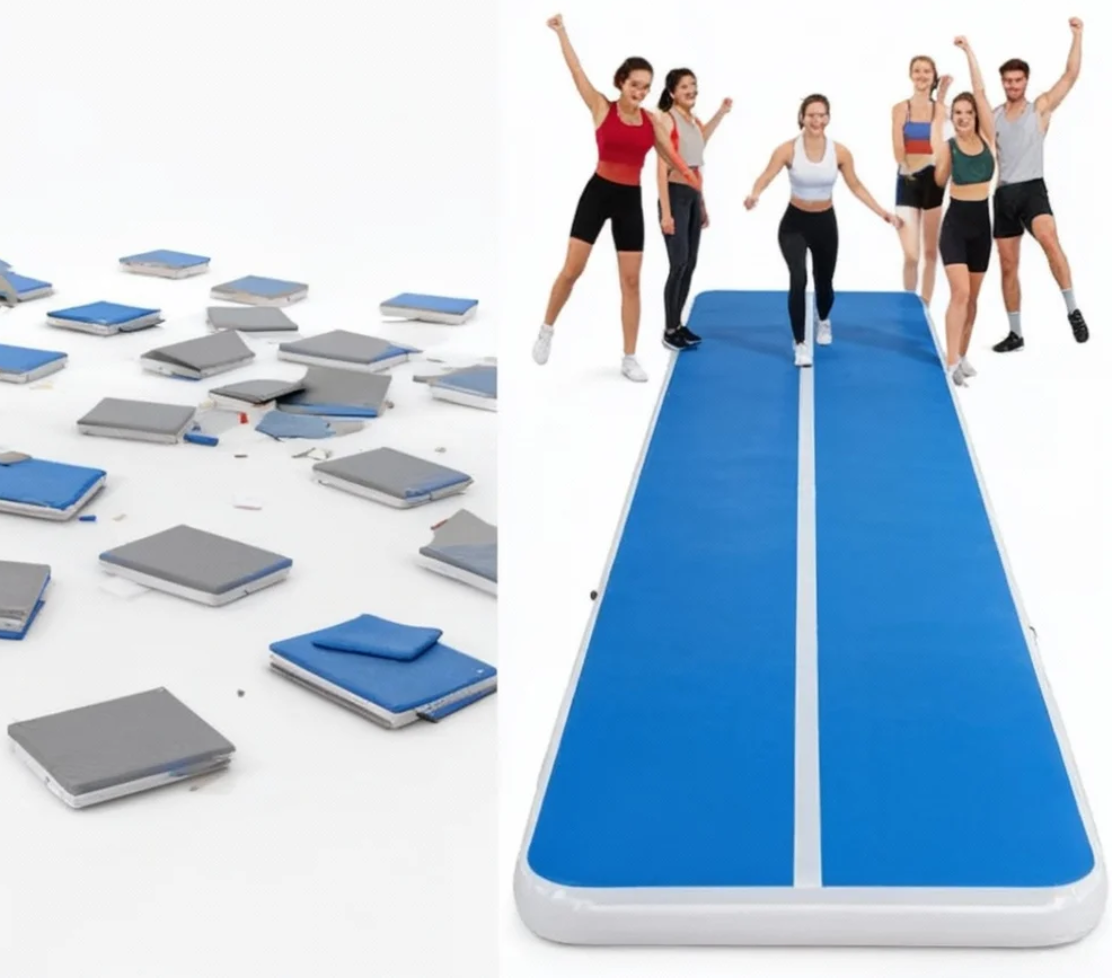
For a B2B buyer, the promise of quality is meaningless without verifiable data. When evaluating a 20ft air track, your due diligence must focus on the technical specifications that directly correlate with performance, safety, and lifespan. Here are the non-negotiable elements to scrutinize before placing a bulk order.
The foundation of durability lies in the material. Insist on commercial-grade, reinforced PVC tarpaulin. Key metrics to request from your supplier include:
Material Thickness: Look for a minimum of 0.55mm, with 0.65mm being the ideal standard for high-traffic facilities. This directly impacts puncture and abrasion resistance.
Tensile Strength: The material should have high tensile strength (measured in Newton per square centimeter) to withstand repeated stretching and impact without tearing.
Low-Temperature Performance: Ensure the PVC formulation remains flexible in cooler environments to prevent cracking.
The seams are the most common point of failure. High-frequency (HF) welding is the industry benchmark for commercial 20ft airtrack mats. This process fuses the PVC at a molecular level, creating a seam that is as strong as the material itself. Avoid suppliers who use basic heat-sealing, which creates a weaker bond prone to delamination under stress.
A poor valve leads to constant maintenance and inconsistent performance. The valve should be a heavy-duty, self-sealing type made from robust materials like ABS plastic. It must provide an airtight seal to ensure the 20 ft air track maintains stable pressure throughout a training session. Ask for the air retention rate—a quality mat should hold pressure effectively for 24-48 hours.
Do not compromise on verified safety. Require documentation for relevant international standards, which test for material non-toxicity and structural integrity. Furthermore, request data on static and dynamic load testing. This proves the mat can safely support the weight and impact forces of multiple athletes, providing you with a critical layer of operational risk management.
Armed with this technical checklist, the next step is to apply it to the procurement process itself.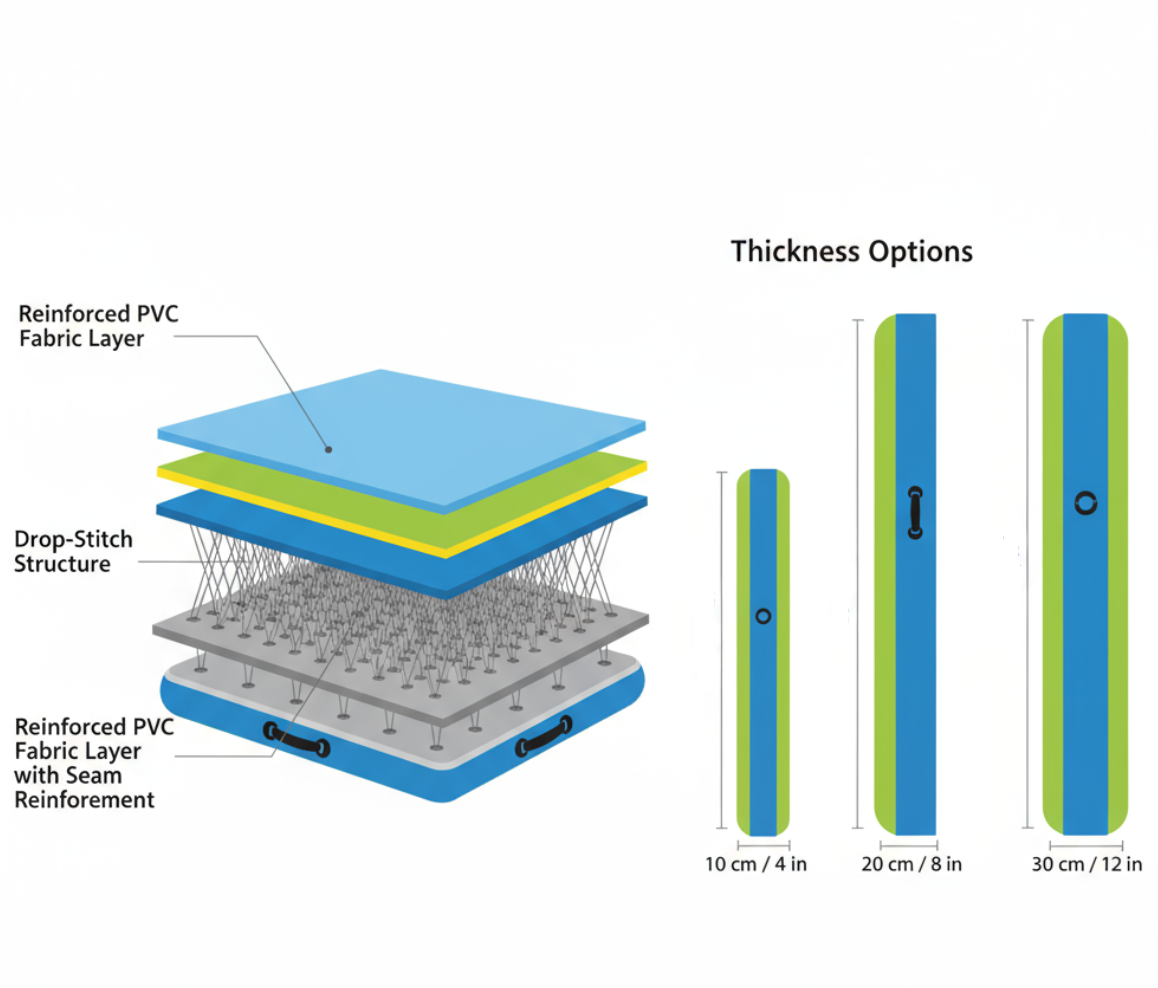
Knowing what to look for in the product is half the battle; the other half is executing a strategic procurement process. Sourcing a commercial 20ft air track requires a methodical approach to vetting partners and securing terms that protect your investment. This blueprint will guide you through the critical steps.
Your first filter should be the supplier's credibility and specialization.
Factory Direct vs. Trader: Prioritize manufacturers with verifiable factory credentials and a track record of supplying other B2B clients or educational institutions.
Request Case Studies: Ask for examples of previous bulk orders for 20ft airtrack mats. A reputable supplier will have these readily available.
Assess Communication: Gauge their responsiveness and their ability to understand and answer your technical questions thoroughly. This is a key indicator of future support quality.
Before committing to a container load, you must validate the product physically.
Order a Sample Unit: Insist on producing a single 20 ft air track to your exact specifications. This is your opportunity to conduct real-world stress tests, verify material thickness, check weld quality, and assess air retention over several days.
Test the Claims: Put the sample through its paces in your facility. Does it perform as promised? Your approval at this stage is the green light for mass production.
The final agreement must be comprehensive and clear.
Warranty Scrutiny: A robust commercial warranty (e.g., 2 years) is a sign of quality. Understand what is covered and the process for claims.
Clarify MOQs and Logistics: Confirm the Minimum Order Quantity and agree on clear Incoterms (e.g., FOB) to define shipping, insurance, and responsibility.
Request Documentation: Ensure you will receive all necessary documentation, including technical data sheets, safety certificates, and commercial invoices, for a smooth customs clearance process.
Following this structured approach minimizes risk and ensures the 20ft airtrack mats you receive are the durable, professional-grade assets you paid for. But what if your needs extend beyond the standard offering?
While the standard 20ft air track meets the needs of most facilities, there are compelling scenarios where a tailored solution becomes a significant competitive advantage. As a strategic buyer, your goal is to procure equipment that doesn't just "fit" but actively enhances your operational and business model. This is where the ability to customize air tracks transitions from a luxury to a strategic necessity.
Consider these real-world applications:
Facilities with Unique Layouts: Your training space may have immovable pillars, irregular walls, or specific bay dimensions that a standard rectangular mat cannot optimize. A custom solution allows you to adjust the width or even create a unique shape to maximize every square inch of your floor plan.
Specialized Training Requirements: A cheerleading gym might need a 20ft airtrack with a slightly firmer pressure for stunting bases, while a gymnastics center may require a softer, more shock-absorbent feel for young tumblers. Customization allows you to specify the internal baffle structure and pressure ratings for your specific disciplines.
Integrated Branding and Aesthetics: A standard blue mat is functional; a 20 ft air track featuring your facility's logo, vibrant brand colors, and even sponsor graphics is a powerful marketing asset. It projects professionalism, builds brand identity, and can create new revenue streams.
When your requirements extend beyond the catalog, you need a manufacturing partner that offers true ODM/OEM capabilities. The power to customize air tracks means you are no longer just purchasing a product; you are co-designing a tailored tool that solves your precise business challenges. This level of collaboration ensures the final product is not just equipment, but an integral part of your facility's identity and success.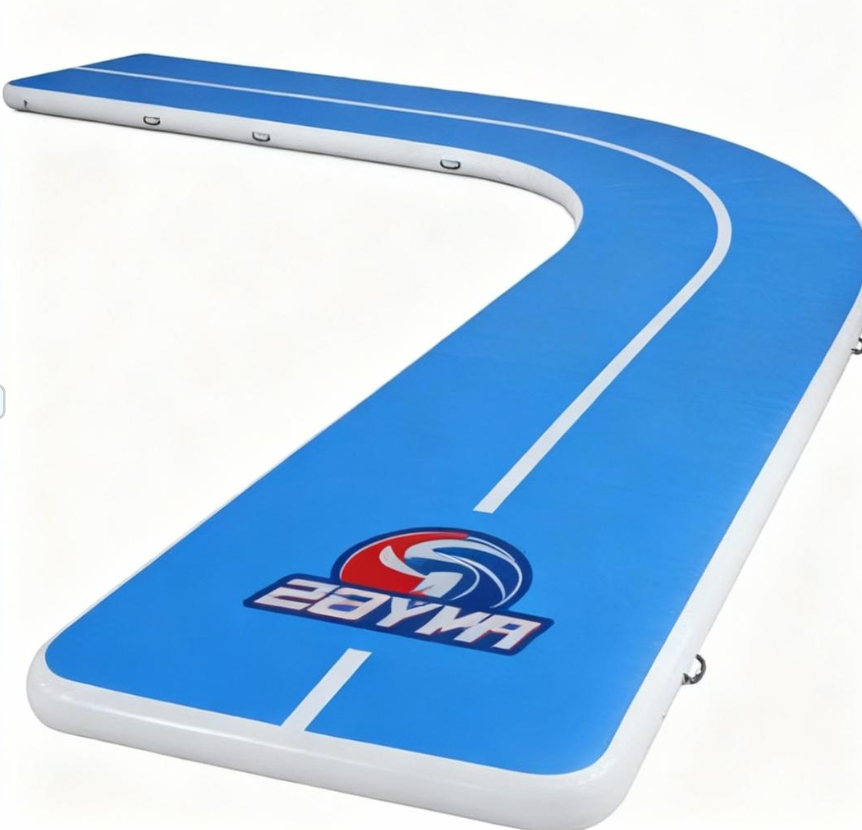
The decision to equip your facility with a 20ft air track is a definitive step toward operational excellence. It is far more than a simple equipment purchase; it is a strategic investment in the three most critical pillars of your business: the safety of your athletes, the efficiency of your training programs, and the long-term financial health of your facility.
We have moved beyond viewing this as a mere mat and now see it for what it truly is: a precision-engineered training tool. The 20ft airtrack delivers a proven return by enabling superior skill development, maximizing your space utility, and offering unparalleled durability that reduces your total cost of ownership. It is the industry standard for a simple, powerful reason: it works.
Stop compromising with inadequate equipment that holds your athletes and your business back. The data, the specifications, and the operational benefits are clear. It is time to invest in the tool that matches the professionalism of your facility and the ambition of your training programs.
Ready to elevate your training facility with the industry-standard 20ft air track? Contact our B2B specialists today for a detailed quote, technical specifications, and to discuss your specific requirements.
Q1: What are the exact dimensions of a standard 20ft air track?
A: A standard 20 ft air track is typically 20 feet in length (approximately 6.1 meters), with a common width of 4 feet (approximately 1.2 meters). This provides the ideal surface area for tumbling passes while maintaining a manageable footprint.
Q2: How many athletes can safely use a single 20ft airtrack at once?
A: For optimal safety and training quality, we recommend a maximum of two athletes using a standard 20ft airtrack simultaneously, typically in a structured, coach-supervised drill. This ensures each athlete has sufficient space to perform skills without risk of collision.
Q3: What is the weight capacity and recommended PSI for a commercial-grade 20 ft air track?
A: A commercial-grade 20ft air track should have a dynamic weight capacity of at least 400 lbs (180 kg) per user. The recommended PSI usually ranges from 0.8 to 1.2, but this can vary based on the specific model and athlete preference. Always refer to the manufacturer's technical data sheet for precise specifications.
Q4: Can I connect multiple 20ft air track units together to create a longer runway?
A: Yes, many professional models are designed with connector systems that allow you to securely join multiple 20ft airtrack units side-by-side or end-to-end. This provides excellent flexibility for creating different training setups. Inquire with your supplier about the specific connector options available.


![What Is an Air Track in Gymnastics? [Complete Guide]](http://ueeshop.ly200-cdn.com/u_file/UPBF/UPBF509/2605/13/photo/WhatIsanAirTrackinGymnastics.png)


