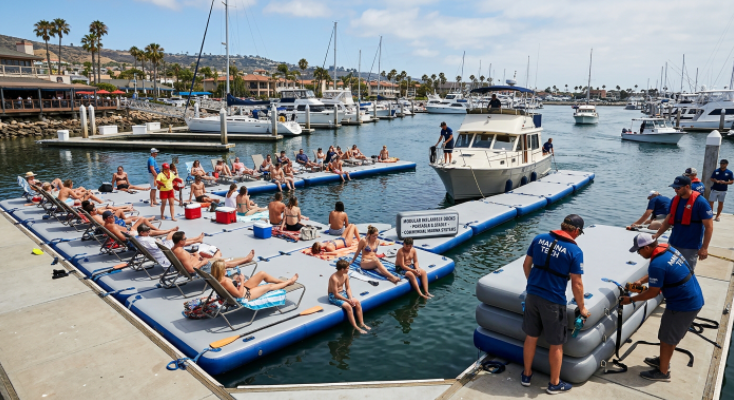
Choosing the right inflatable dock supplier can make or break your product line. A good supplier helps you deliver safe, durable products and protect your brand. A poor one brings delays, defects, and unhappy customers. This guide walks through how to evaluate suppliers with confidence and make smart sourcing decisions.
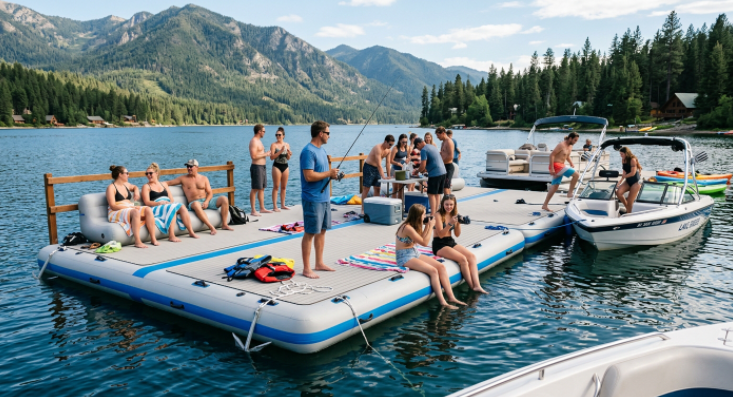
An inflatable dock is a portable floating platform, usually made with drop-stitch material and reinforced PVC or TPU. When inflated, it becomes firm—almost like a floating floor. When deflated, it folds down for easy transport and storage.
Think of it like a “floating stage.” It creates stable space on water for leisure, work, or sport. Businesses use inflatable docks for marinas, resorts, yacht platforms, swim areas, rental operations, and event setups. Some models are compact and simple. Others are modular, so users can connect sections and build larger floating systems.
Most quality docks include:
For sourcing teams, inflatable docks are attractive because they solve a real problem: they offer rigid performance without the logistics burden of traditional hard docks. This makes them ideal for import programs, especially when working with a strong inflatable floating dock supplier that supports quality control, customization, and after-sales service.
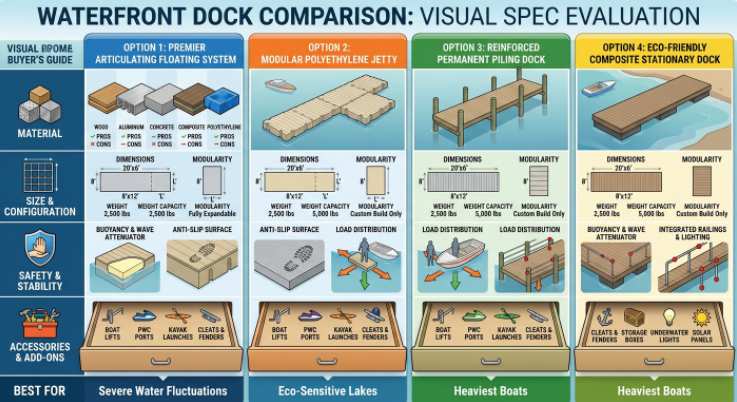
Picking a supplier is like choosing a long-term business partner, not just placing a one-time order. Price matters, but reliability matters more. Here are the most important factors.
Start with build quality. Ask what material is used (PVC thickness, drop-stitch density, UV resistance, anti-mildew treatment). Request close-up photos and videos of real production and finished goods. A serious commercial inflatable dock manufacturer will explain specs clearly and back them with test data.
Safety is non-negotiable. Ask for:
Weight claims should be realistic and tested. If numbers sound too good to be true, ask for proof.
A dock for a private villa is different from one for a rental fleet. Match dock dimensions and thickness to end use:
A good supplier helps align specifications with your market, not just pushes what is in stock.
Stability depends on width, thickness, internal structure, and deck layout. Ask whether the dock is designed for calm water only or can handle moderate movement. Features like wider bases, reinforced corners, and balanced buoyancy improve user confidence.
Time is money. Ask how long inflation takes, pump specs, and whether one person can manage setup. Also ask for folded package size and carton dimensions for shipping planning.
Docks are only as useful as their accessories. Check whether anchoring systems, connection straps, mooring lines, ladders, and carry bags are included or optional. Missing accessories often create hidden costs.
Ask:
A supplier that stands behind products is more valuable than one with the lowest quote.
Track record matters. Look for factories with years of export history, clear processes, and references. If you want deeper selection criteria, review this guide to choosing a reliable supplier.
In short: don’t buy docks, buy confidence. Strong quality systems, honest communication, and consistent delivery are what keep margins healthy over time.
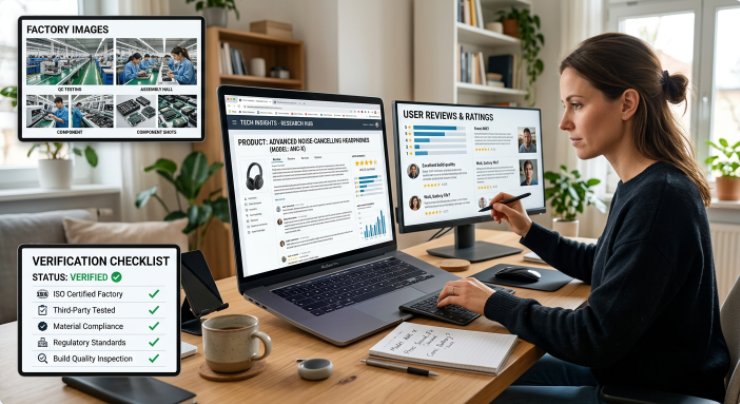
Many suppliers look good online. The real test is evidence. Use this checklist to separate strong partners from risky ones.
Ask how long they’ve manufactured inflatable docks specifically—not just inflatables in general. Experience in your product category reduces mistakes and speeds development.
Look for reviews on third-party platforms, trade forums, and importer communities. Ask for references from similar markets. One or two bad reviews are normal. Repeated complaints about leaks, delays, or poor support are red flags.
A reliable factory can explain:
Vague answers usually mean weak process control.
A confident supplier offers fair warranty terms and a clear defect handling process. Ask to see real examples of how claims were resolved.
Fast, clear, consistent replies are a strong sign. If communication is poor before payment, it often gets worse after payment.
If a supplier claims premium quality, ask for:
Certification is especially important. Learn why ISO certification helps validate quality systems and compliance culture.
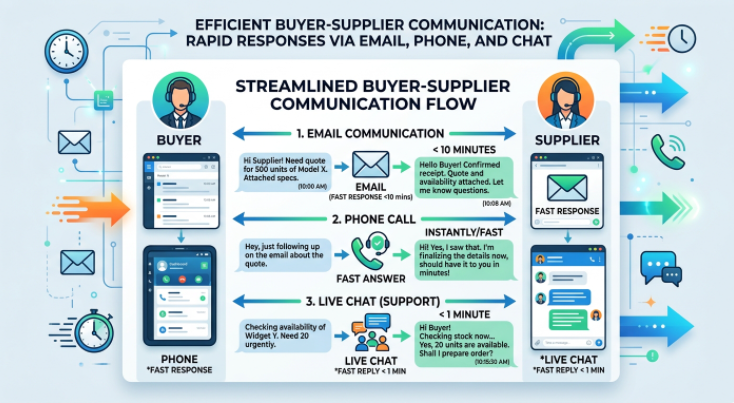
Customer service is often ignored during sourcing—until something goes wrong. But in B2B importing, service quality directly affects cost, timeline, and brand reputation.
The supplier should offer multiple channels: email, WhatsApp, phone, and video call. Access should be simple, not guarded behind long delays.
A good standard is 24-hour response on weekdays for normal questions, and faster for urgent production or shipping issues. Slow responses cause missed deadlines.
Every factory faces issues occasionally. The difference is how they respond. Strong suppliers provide:
You want solution-oriented partners, not excuse-oriented ones.
Good communication is short, direct, and documented. Confirm key details in writing:
Clarity prevents disputes later.
A capable supplier understands import realities: compliance documents, carton labeling, spare parts planning, and after-sales risk. They should guide proactively, not wait to be asked every step.
Ask for examples of long-term clients. Repeat customers often mean dependable service. Service consistency is crucial for private-label inflatable docks, where your brand image depends on both product and support quality.
A practical tip: run a small pilot order first. It reveals how the supplier performs under real pressure—sampling, revisions, QC, and shipping coordination.
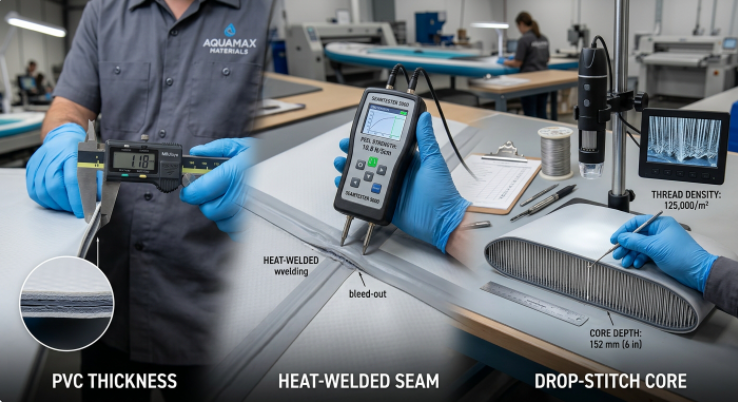
Quality should be measured, not guessed. Before committing to large orders, use a clear verification process.
Ask for exact material specs:
Request physical swatches when possible. Material tells you most of what you need to know about durability.
Seams are common failure points. Ask how seams are made and reinforced. Request close-up photos and air-retention test results. Clean, consistent seam work is a sign of disciplined production.
A dock should become rigid at recommended PSI. If it feels soft or unstable at normal pressure, performance will suffer. For serious sourcing, request a pre-shipment inflation video with pressure reading visible.
Verify load claims with test standards. Ask whether limits are tested in static conditions only or also under movement (real use scenario).
Key safety items include:
Valves should seal tightly and resist slow leaks. Ask brand/type of valve and spare valve policy.
Good warranty terms reflect confidence in build quality. Review exclusions carefully and confirm claim process in writing.
For a pre-order checklist that maps directly to inspection steps, review these bulk order checks before placing large-volume purchase orders for wholesale inflatable docks.
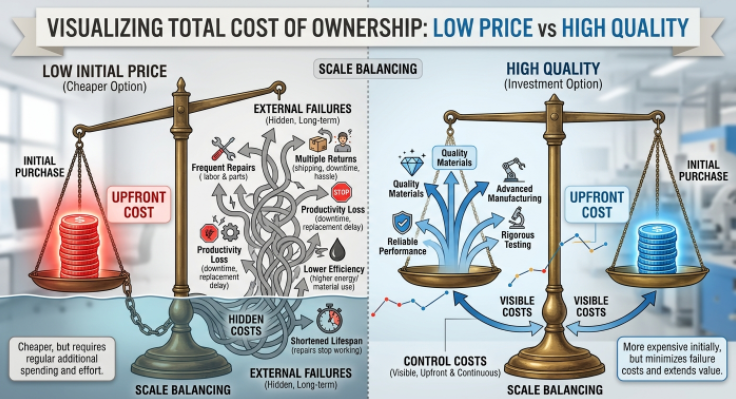
Everyone wants the best price. But in sourcing, the cheapest quote can become the most expensive mistake.
Inflatable dock pricing is usually based on:
To understand market context, this guide on dock pricing explains cost drivers when sourcing from factories.
Low quotes often hide compromises:
That may reduce upfront cost, but increases returns, complaints, and replacement expenses. For importers, those hidden costs eat profit quickly.
Good negotiation is not “cut everything.” It’s “optimize smartly.”
Try this approach:
For private-label inflatable docks, negotiate branding costs separately (logo print, color changes, custom manuals, carton design). This keeps quality baseline stable while improving brand value.
The goal is balance: competitive landed cost plus dependable performance. That combination wins repeat business.
With proper care and quality materials, most docks last 3–7 years, and premium models can last longer in moderate-use conditions.
They perform well in many conditions, but extreme heat, storms, and sharp debris can reduce lifespan. Proper anchoring and storage matter.
Yes, depending on size and design. Always follow tested load limits from the manufacturer, including dynamic load guidance.
Request samples, verify material specs, review seam quality, ask for pressure/air retention tests, and use third-party inspection before shipment.
Typical issues include delayed production, incorrect labeling, customs document errors, and unexpected freight changes. Written SOPs reduce risk.
Ask for compliance documents, test reports, and process certifications. Validate claims with independent checks and document review.
Most factories offer logo printing, color matching, accessory bundles, and packaging customization. This guide on dock customization explains ODM options clearly.
Document everything immediately (photos, videos, carton labels), notify supplier within agreed timeline, and follow written claim steps.
Yes, if materials are marine-grade. Rinse after saltwater use to protect surfaces, valves, and accessories.
Match size to use case, expected user count, and water conditions. If unsure, start with your largest realistic scenario and work backward.
Choosing the right inflatable floating dock supplier is about risk control and long-term value. Focus on materials, seam quality, tested safety, responsive support, and proof-based reputation. Compare total cost, not just unit price. When done right, sourcing wholesale inflatable docks from a trusted commercial inflatable dock manufacturer creates stable margins, fewer claims, and stronger brand trust over time.


