Quick Summary: Shipping Inflatable Mirror Balls from China
For B2B importers, the choice of shipping depends heavily on volume and event timelines. Express (DHL/FedEx) is ideal for samples or urgent orders under 100kg (3–5 days). Air Cargo strikes a balance for medium shipments (7–10 days), while Sea Freight remains the standard for bulk orders of inflatable mirror balls from China, offering the lowest cost per unit with a transit time of 25–45 days. Crucial Note: Due to their spherical shape, mirror balls often incur volumetric weight charges, making professional deflation and compact packaging essential to controlling landed costs.
As an event planner or wholesale distributor, you know the nightmare scenario: The venue is booked, the lighting rig is set, but the centerpiece—the giant mirror balls—are stuck in customs or, worse, damaged in transit.
When sourcing inflatable mirror balls from China, the manufacturing quality is only half the battle. The other half is logistics. At AFTERSEA, we don't just sell products; we deliver solutions that arrive on time and intact. Whether you are prepping for a massive music festival or stocking up for the holiday retail season, understanding the logistics is key to protecting your margin and your reputation.
Here is my professional guide to navigating the shipping options for your next order.
This is the most common question I get from new B2B clients. The answer isn't just about price; it's about the "Volume-to-Value" ratio.
Inflatable mirror balls are unique. They are lightweight but, unless packed expertly, they can be bulky. Here is how I break down the options for my clients:
| Feature | Express Courier (DHL/FedEx/UPS) | Air Cargo (Airport-to-Airport) | Sea Freight (LCL/FCL) |
|---|---|---|---|
| Best For | Samples, Urgent Restocks (<100kg) | Medium Orders (100kg - 500kg) | Bulk Orders (>1CBM or >500kg) |
| Transit Time | 3–5 Business Days | 7–10 Days | 25–45 Days |
| Cost | High ($$$$) | Medium ($$$) | Low ($) |
| Handling Risk | Low (Door-to-Door) | Medium (Requires local handling) | Varies (Requires palletizing) |
My Recommendation: If you are importing inflatable mirror balls for a specific event happening next month, do not risk Sea Freight. Port congestion is unpredictable. Go with Air Cargo. However, for annual stock planning where margins are tight, Sea Freight is the only viable commercial option to keep your landed cost competitive.
In the B2B events industry, a "late" delivery is a "failed" delivery.
When we discuss timelines, I always advise my clients to look beyond the "Transit Time." You need to calculate the "Total Lead Time."
I have seen too many buyers cut it too close. If your event is on October 1st:
Pro Tip: If you have a large order but a tight deadline, ask us about a Split Shipment. We can ship 10% of the mirror balls via Air for your immediate needs/display, and send the remaining 90% via Sea to save costs.

This is where inexperienced importers often lose money.
In logistics, you pay for either the Actual Weight (Dead weight) or the Volumetric Weight (Dimensional weight)—whichever is higher.
Inflatable mirror balls are the textbook definition of "Volumetric Cargo." A 3-meter mirror ball weighs relatively little, but if it is not folded correctly, it takes up a massive amount of space. Airlines charge based on volume because that box takes up space that could have been used for denser cargo.
At AFTERSEA, we understand that packaging is a cost-saving tool. When you customize inflatable mirror balls with us, we don't just customize the color and size; we customize the packing method.
By optimizing the box dimensions, we can sometimes reduce the chargeable weight by 20-30%, directly impacting your bottom line.
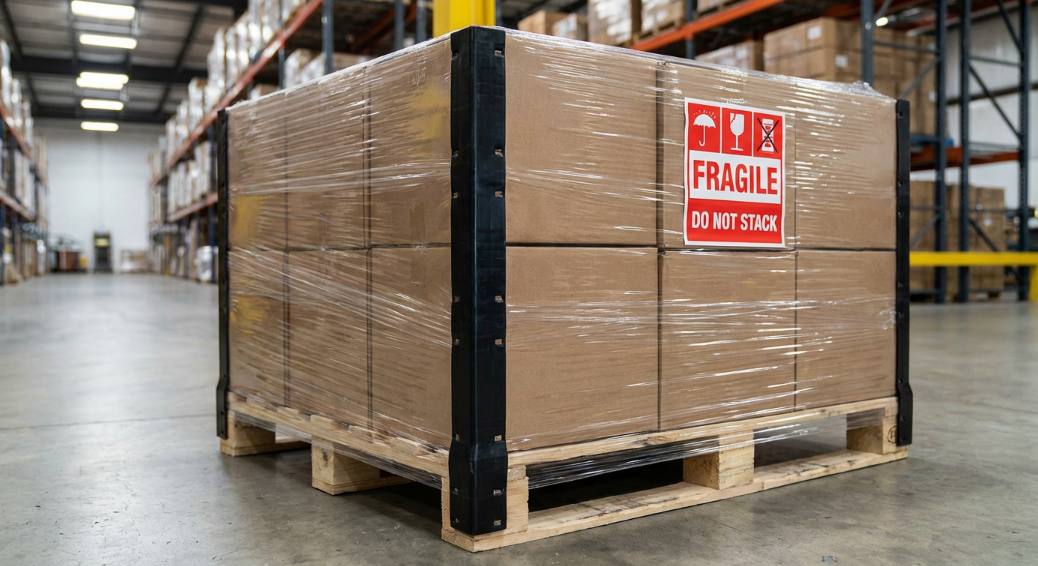
When you step up to purchasing hundreds of units or very large sizes (e.g., 5m+ diameters), standard courier boxes won't cut it.
For LCL (Less than Container Load) sea shipments, I strictly advise palletizing your goods.
For many of my B2B clients who don't have their own logistics department, I recommend DDP (Delivered Duty Paid).
Successfully importing inflatable mirror balls requires more than just picking a product from a catalog; it requires a logistics strategy that aligns with your business model. Whether you prioritize speed for a looming deadline or cost-efficiency for wholesale stocking, the shipping method you choose is a critical component of your profit margin.
At AFTERSEA, we see ourselves as your partner in this process. We ensure that your goods are not only manufactured to the highest standard but are also packed, documented, and shipped in a way that protects your investment. Don't let logistics be the bottleneck in your business growth.
Q: Can you ship the glue and repair kits via air freight?
A: Generally, no. Liquid glue is classified as a hazardous material (HazMat) by airlines and requires complex/expensive documentation. For air shipments, we typically include the PVC repair material but advise clients to source standard PVC adhesive locally to avoid shipping delays. For sea freight, we can include the glue without issues.
Q: How do you prevent the mirror surface from scratching during transit?
A: We take a multi-layer approach. First, the ball is wrapped in a soft "tissue" layer that protects the mirror finish. Then, it is placed in a thick PE bag. Finally, it goes into a 5-ply or 7-ply corrugated export carton. We do not place accessories (like pumps) directly against the folded ball to prevent pressure marks.
Q: What happens if the goods arrive damaged?
A: If you choose our DDP service, we cover the risk until it reaches your door. We always recommend purchasing cargo insurance for sea freight. If you discover damage upon arrival, take photos of the outer box and the product immediately and contact our support team. We stand by our quality and will work to resolve it instantly.


![What Is an Air Track in Gymnastics? [Complete Guide]](http://ueeshop.ly200-cdn.com/u_file/UPBF/UPBF509/2605/13/photo/WhatIsanAirTrackinGymnastics.png)


