For commercial inflatable wrestling mats, the recommended air pressure typically ranges from 1.5 PSI to 5.0 PSI (0.1 to 0.35 bar). The ideal setting depends on mat thickness: 10cm mats require higher pressure (4-5 PSI) to prevent "bottoming out," while 20cm mats can be used at lower pressures (1.5-3 PSI) for maximum shock absorption. For B2B importers, it is critical to supply pumps with built-in pressure gauges to ensure safety and prevent over-inflation damage.
When importing high-performance inflatable wrestling mats—often referred to as "Air Tracks" in the B2B world—the technical conversation doesn't end at size and color. The most common technical support inquiry from gym owners and martial arts academies involves pressure management.
Incorrect air pressure doesn't just result in a poor training experience; it can lead to athlete injury or permanent damage to the Double Wall Fabric (DWF). Here is the professional breakdown of everything you need to know about inflatable mat pressure.
Table of Contents
- The Physics of Safety: How Air Pressure Controls Shock Absorption
- Sourcing the Right Gear: Selecting Electric Pumps for Commercial Pressure Needs
- Durability Testing: How to Verify Pressure Retention Under Heavy Usage
- Risk Management: Protecting Your Investment with End-User Guidelines
- Interactive Pressure Knowledge Quiz
- Conclusion
- References
The Physics of Safety: How Air Pressure Controls Shock Absorption
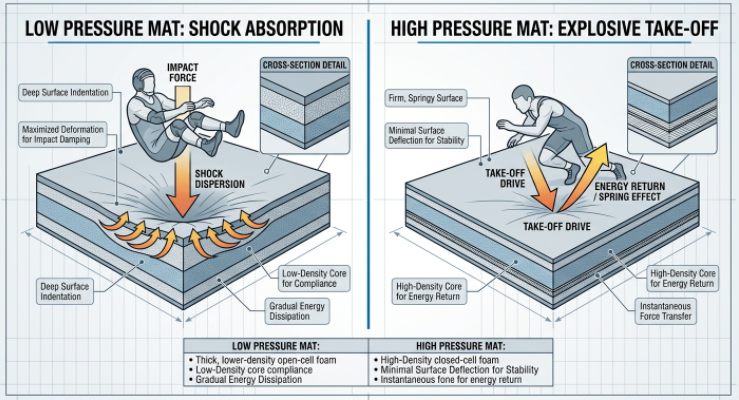
In wrestling and MMA, the mat must provide "active" protection. The pressure inside the mat dictates how much kinetic energy is absorbed versus how much is returned to the athlete.
- Low Pressure (1.5 - 2.5 PSI): Ideal for beginner training and rehabilitation. It allows for a "deeper" landing, which significantly reduces the impact on joints during high-amplitude throws. However, if the pressure is too low, the athlete may "bottom out," hitting the hard floor beneath.
- High Pressure (3.5 - 5.0 PSI): Provides a firm, stable surface similar to a traditional foam wrestling floor but with more "rebound." This is preferred for competitive sparring and explosive movements where foot stability is paramount.
As a B2B supplier, you must advise clients that thicker mats (20cm+) offer a wider "safe pressure window" compared to thinner 10cm mats.
Sourcing the Right Gear: Selecting Electric Pumps for Commercial Pressure Needs
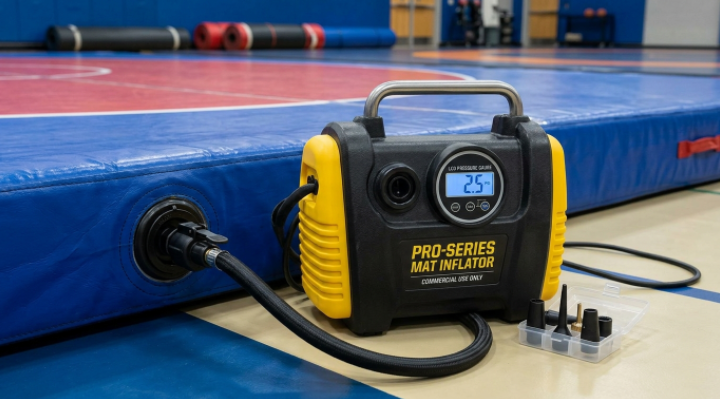
A standard "air mattress" pump is insufficient for commercial wrestling mats. To meet B2B quality standards, your import package should include specialized high-pressure electric pumps.
- Dual-Stage Inflation: Look for pumps that offer high-volume/low-pressure inflation for speed, followed by a high-pressure stage to reach the final PSI.
- Integrated Pressure Gauges: This is the most important feature. B2B clients need to see the exact PSI to ensure consistency across multiple mats in a facility.
- Deflation Function: High-traffic gyms need to pack up mats quickly. A pump that can "vacuum out" the air allows the mat to be rolled tighter, saving storage space.
Durability Testing: How to Verify Pressure Retention Under Heavy Usage
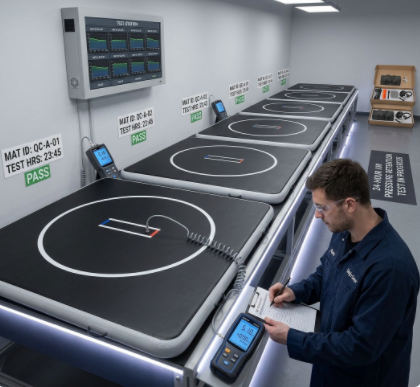
When importing from China, you must specify your Pressure Retention Standard in the sales contract. A high-quality DWF mat should not lose more than 5% to 10% of its pressure over a 24-hour period under static conditions.
To test this during a pre-shipment inspection:
- The Soap Water Test: Spray soapy water on the seams and valves. Any bubbling indicates a micro-leak.
- The Weight Load Test: Place a heavy weight (e.g., 100kg) on the mat for 4 hours and measure the PSI before and after. This simulates the heavy "foot traffic" of a wrestling class.
- Valve Check: Ensure the "Bravo" style valves are tightened with a valve wrench (often included in the repair kit).
Risk Management: Protecting Your Investment with End-User Guidelines
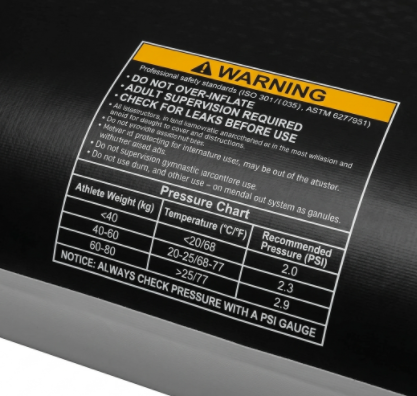
To prevent product failure and liability claims, provide clear end-user guidelines. The biggest threat to inflatable mats is Thermal Expansion.
- Sunlight Warning: If a mat is left in direct sunlight (e.g., outdoor training), the internal air expands rapidly. A mat inflated to 5 PSI in the morning can easily reach 8+ PSI by noon, potentially bursting the internal drop-stitch fibers.
- Under-Inflation Risk: Warn users that training on an under-inflated mat can lead to ankle rolls or "bottoming out" injuries.
- The "Hand-Check" Method: Teach users to check pressure by standing on the mat with one foot. The mat should not touch the floor under their weight.
Interactive Pressure Knowledge Quiz
1. What is the main risk of over-inflating an inflatable wrestling mat past 6 PSI?
- A) It becomes too soft to walk on.
- B) The internal drop-stitch threads may snap, causing a permanent "bulge."
- C) The air will turn into liquid.
- (Answer: B - Excessive pressure puts too much tension on the internal polyester threads.)
2. Why do 10cm (4-inch) mats require higher PSI than 20cm (8-inch) mats?
- A) They are made of different materials.
- B) To prevent athletes from "bottoming out" (hitting the hard floor) on impact.
- C) Because they are smaller.
- (Answer: B - Thinner mats have less travel distance to absorb impact, so they must be firmer.)
3. How does outdoor heat affect a mat inflated in the cool morning?
- A) It causes the pressure to drop.
- B) It has no effect.
- C) It increases the internal pressure due to air expansion.
- (Answer: C - Heat increases PSI; users should slightly deflate mats if used in the sun.)
Conclusion
Mastering the air pressure requirements for inflatable wrestling mats is a hallmark of a professional B2B supplier. By ensuring your products are paired with the correct pumps, undergoing rigorous pressure-retention testing, and providing clear user guidelines, you reduce "quality dispute" claims and build long-term trust with gym owners.
References
[^1]: American College of Sports Medicine (ACSMz). (2022). Facility Standards and Safety Guidelines for Sports Surfaces. Retrieved from https://www.acsm.org
[^2]: International Chamber of Commerce (ICC). (2020). Incoterms® 2020 Rules for B2B Logistics. Retrieved from https://iccwbo.org
[^3]: ASTM International. (2021). ASTM F355-16 Standard Test Method for Impact Attenuation of Playing Surface Systems. Retrieved from https://www.astm.org/f0355-16.html


