If you're looking at a drop stitch hot tub for your lineup, you're probably weighing it against the standard PVC inflatable spas that have run the category for years. That comparison matters. The construction method behind a spa decides how it holds up under daily use, how it performs once the weather turns, and how much margin you actually have once supplier quality gets factored in. This guide covers what drop stitch is, why demand for it keeps climbing, and what to check before you sign off on a supplier.
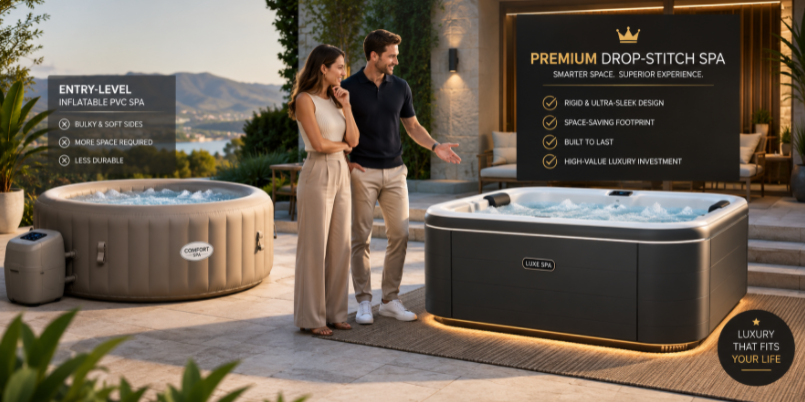
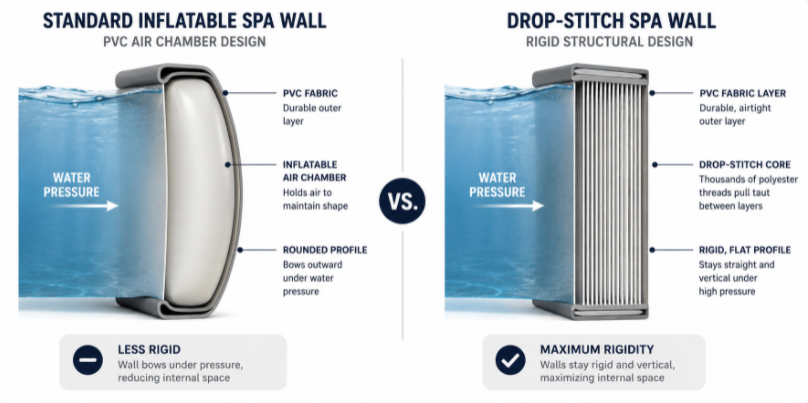
A drop stitch hot tub is an inflatable spa built from a fabric where two layers of material are joined by thousands of short internal threads. Air pressure alone doesn't hold the shape here. The threads do most of the work, and the result is a wall that stays flat and rigid under load instead of flexing like a standard air chamber.
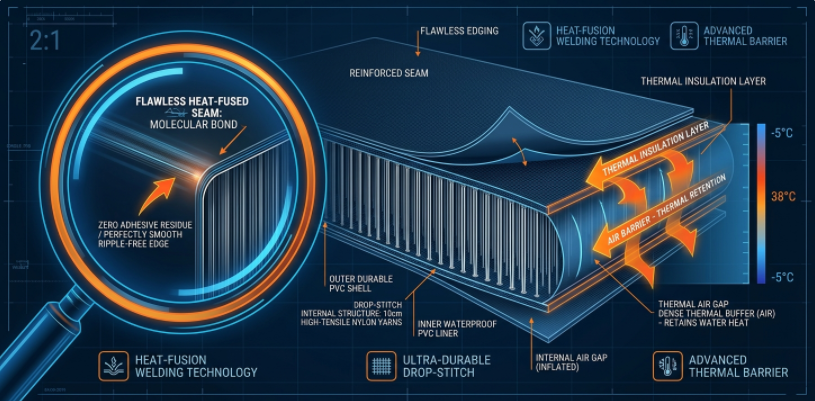
The idea is simple. Two polyester fabric layers get connected by a dense network of threads running between them, and as air fills the chamber, those threads pull tight and lock the panel into a stable shape. Bestway describes this network as thousands of connecting fibers strong enough to let the wall support real weight while staying rigid enough to resemble a hard-sided spa. Newer double-wall fabric variations use heat-fused seams instead of glued edges, and that shift has cut down on the seam failures that used to plague older inflatable spa builds.
Standard PVC spas rely on internal beams and air pressure to hold their shape. It works, but the walls end up softer and start sagging over time. Drop stitch panels can typically handle up to ten times the internal pressure that a layered PVC spa can tolerate, which is exactly what gives it that firmer, straighter-walled profile. Industry comparisons of spa materials generally place drop stitch alongside PVC and reinforced polyester as one of a handful of options buyers weigh, with the tradeoff being a higher unit cost for a shell that lasts longer. If you want the deeper technical version of how the layers and threads interact, we've broken down the mechanics of drop stitch construction elsewhere on the site.
This isn't just a material preference. Buyer demand is actually moving in this direction.
The inflatable and rotomolded spa segment is projected to grow faster than the hot tub category overall, posting the highest CAGR of any product type through 2030, as buyers increasingly favor portability and lower upfront cost over permanent installations. That shows up at the retail level too. Inflatable hot tub sell prices have climbed alongside sharp recent growth, with sellers reporting rising demand over the past two years and interest peaking around early summer. And on the broader portable side, smart-enabled units are gaining share fastest. Buyers in this category aren't just hunting for cheap and inflatable. Plenty of them will pay more for something that feels closer to a permanent spa.
That growth is also being driven by renters, seasonal users, and budget-conscious buyers who want the convenience of an above-ground unit without a permanent installation. That's roughly the same customer a drop stitch spa is built for, which is worth keeping in mind when you're deciding how much catalog space to give the category this year.
Drop stitch sits at the upper end of the inflatable spa tier. It costs more than basic PVC but competes with rotomolded and entry-level acrylic units on rigidity and perceived quality. For retailers and distributors, that makes it a useful mid-tier product to sit alongside standard inflatables for customers who want more durability without jumping to a permanent installation. It gives you room to price above entry-level PVC without asking anyone to make the much bigger leap to a hard-sided or built-in spa.
Not every drop stitch spa is built to the same standard, and the differences don't always show up in a product photo. Here's what actually separates a well-made unit from one that generates returns.
Ask your supplier directly about thread density per square meter and how the seams are sealed. Fusion-layer sealing, which uses heat rather than adhesive to bond the PVC layers, has meaningfully cut seam failure rates compared to older glued construction. Confirm which method a factory actually uses. Don't take the label "drop stitch" as a guarantee of quality on its own. This is one of the clearest ways drop stitch pools compare against PVC on lifespan, and the same logic carries over directly to spa construction.
Higher-quality drop stitch panels are built to withstand significantly more internal pressure than standard inflatables, and that's part of why they resist punctures better in daily use. The tight thread network under load is what keeps the tub holding its shape instead of deforming under weight. But that performance depends on consistent manufacturing. Ask for pressure test data instead of assuming every drop stitch unit performs the same way.
The gap between the two fabric layers acts as a thermal buffer, and that space plays a real role in heat retention. That matters if you're marketing a spa for cold-weather or year-round use. If your buyers sit in colder climates, ask suppliers directly whether the unit is rated for winter operation or built strictly as a warm-season product. The difference shows up later as customer complaints, not returns. Also check whether the heater and pump are sized correctly for the tub's volume. An underpowered heater will struggle to hold temperature even inside a well-insulated shell.
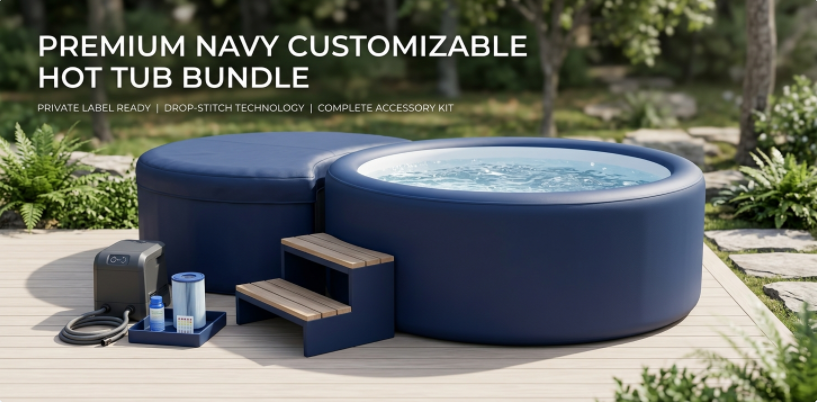
Sourcing isn't only about material specs. What a supplier lets you customize often decides whether the product actually differentiates you in your market.
Ask about seating capacities, footprint dimensions, and whether wall thickness can flex for different price tiers. This is also where cost conversations get concrete: unit cost on drop stitch inflatables varies significantly based on thickness and finish, so get a clear cost breakdown by spec before committing to volume. A supplier who can walk you through how cost scales across two or three thickness tiers usually understands their own production process well enough to hold a consistent spec run after run. That consistency matters more once you're placing repeat orders instead of a single test batch.
Private labeling, custom colors, and bundled accessories like covers, filters, or steps can turn a commodity product into something that reads as a distinct offering in your catalog. Rachel M., owner of PowerPulse Fitness Equipment, saw this firsthand. Getting products customized to her exact specs let her offer something competitors weren't carrying. The same logic applies to a drop stitch spa line if you want it to stand apart from generic inflatable listings.
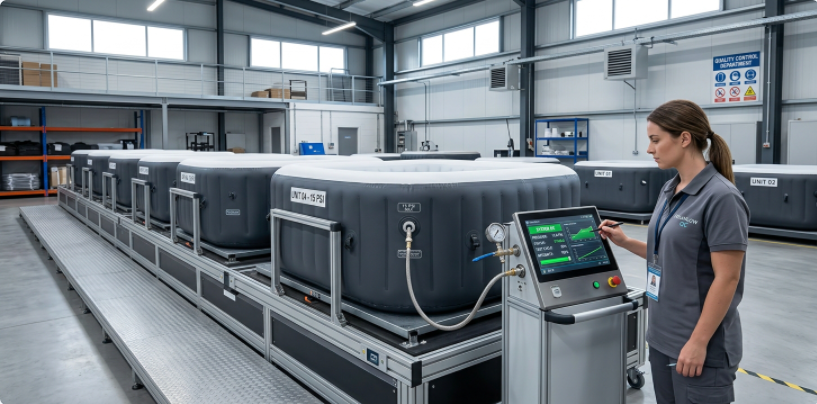
This is the step that decides whether the specs on a product sheet actually show up in the units you receive. A supplier's claims are only as good as the process backing them.
Ask specifically how pressure retention gets tested, what quality checks happen before shipment, and whether the factory can share inspection reports instead of verbal assurances. If you want a structured starting point, we've laid out how we evaluate drop stitch manufacturers based on production capacity, certifications, and export experience. The same framework applies whether you're sourcing pools or spas.
Vague answers about material specs. An unwillingness to share test data. A supplier that can't explain their own seam-sealing method in plain terms. These are largely the same red flags to watch for when vetting a supplier of drop stitch pools, and they transfer directly to spa sourcing since the underlying material and manufacturing risks barely change.
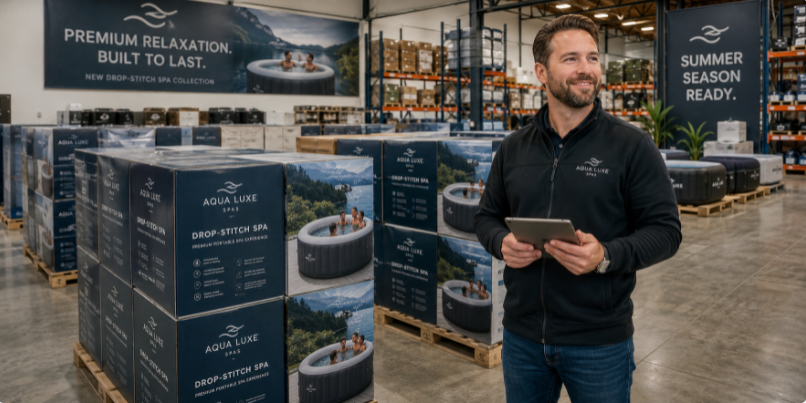
For most buyers, it comes down to positioning. If your customers shop inflatable spas mainly on price, standard PVC will likely stay your volume driver. But if you're seeing demand for something closer to a permanent spa, with firmer walls, better insulation, and a longer usable life, a drop stitch line gives you that mid-tier option, and it's growing faster than the category average. The inflatable segment's growth rate already outpaces the broader hot tub market, and buyers are increasingly willing to pay more for smart, better-performing units. Stocking drop stitch now puts you ahead of that shift instead of reacting to it later.
The practical next step is supplier vetting, not product selection. Once a manufacturer's material specs, seam construction, and QC process check out, the customization and margin decisions get a lot easier to make.
A drop stitch hot tub is a different construction method with real consequences for durability, insulation, and how the product actually holds up in a customer's backyard. The technology is well understood at this point. What separates a good sourcing decision from a costly one is supplier quality. Confirm thread density and seam method. Get pressure and QC test data in writing. Treat customization as a real lever for differentiation, not an afterthought. If you're ready to look at drop stitch spa options for your next order, we're glad to walk through specs, customization, and lead times with you directly.


