Gyms choose air track mats over traditional foam mats because they deliver superior safety, portability, durability, and cost-efficiency. For B2B buyers, bulk purchasing and customization provide long-term value, making air track tumbling mats the smarter investment.
Safety is a non-negotiable priority for any training facility. Traditional foam mats can wear out unevenly, creating hard spots or sagging areas that increase the risk of ankle twists, joint strain, and falls. Air track mats, by contrast, provide consistent shock absorption across the entire surface. Their pressure can be adjusted for softer landings during beginner practice or firmer bounce for advanced routines.
For gyms, this translates to fewer injury incidents, happier clients, and a stronger reputation for maintaining safe training environments. In B2B terms, it’s not just about equipment — it’s about liability protection and client trust.
Foam mats are heavy, rigid, and difficult to move between training zones. This inflexibility wastes precious floor space in gyms, schools, or multi-use facilities. Air track tumbling mats solve this with inflatable convenience: they can be fully inflated in minutes, then quickly deflated and rolled up into a compact size for storage.
For B2B buyers, portability means maximum utilization of limited training space. A single mat can serve multiple classes daily, reducing the need for excess equipment purchases. For event organizers or mobile training academies, the mats are easy to transport and set up anywhere.
In today’s competitive fitness industry, branding isn’t just nice to have — it’s essential. Air track mats can be fully customized with company logos, signature colors, and specific dimensions, turning them into both functional equipment and brand assets.
This is especially powerful for gyms and academies that want to create a cohesive, professional look in their facilities. Distributors also benefit, since custom designs help differentiate their product line. Explore customization at customize air tracks.
Customization not only elevates your brand identity but also signals professionalism and long-term commitment to your clients.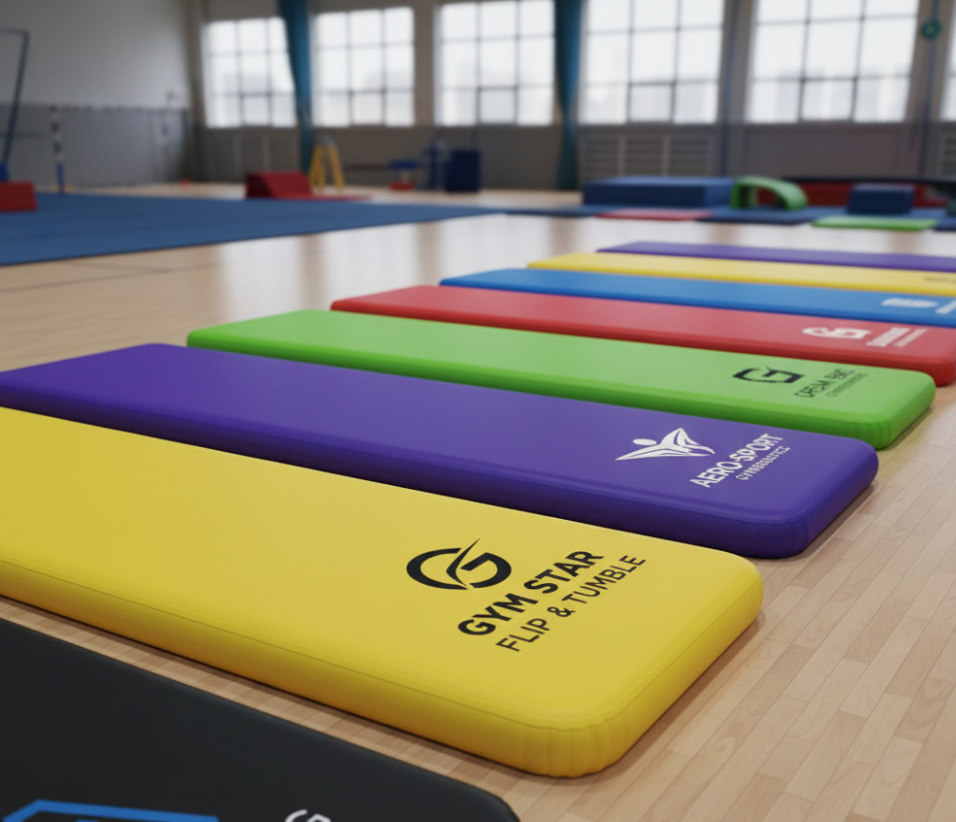
When you’re outfitting an entire training center, buying mats one by one simply doesn’t make financial sense. Foam mats not only wear out quickly, they also require frequent replacements, driving up your long-term expenses.
By contrast, bulk buying air track tumbling mats directly from manufacturers delivers measurable cost advantages:
Lower Per-Unit Price: B2B buyers can save up to 20–30% on average by ordering in bulk compared to retail pricing.
Reduced Logistics Costs: A consolidated shipment of 50 units is significantly cheaper per mat to transport than ordering 10 at a time.
Inventory Efficiency: Bulk stock ensures you always have replacement mats or expansion mats on hand, avoiding downtime in your facility.
📊 Cost Comparison Example (Per Mat, 3-Year Average Use)
| Mat Type | Avg. Cost Per Mat | Lifespan | Cost Per Year | Bulk Savings |
|---|---|---|---|---|
| Traditional Foam Mat | $200 | 1 year | $200 | None |
| Air Track Tumbling Mat | $400 | 5 years | $80 | 25% off in bulk |
This means a gym buying 20 air tracks in bulk could save over $8,000 across five years compared to repeatedly replacing foam mats.
💡 Industry Insight: According to global sports equipment distributors, bulk orders are now the preferred procurement method for over 65% of gym chains because they ensure price stability and long-term ROI.
For B2B buyers, bulk isn’t just about saving money upfront — it’s about locking in predictable costs, scaling your facility faster, and securing competitive margins that foam mats simply can’t match.
One of the biggest frustrations with foam mats is that they compress and lose their structure quickly. Air track mats are built with Drop-Stitch Fabric (DWF) technology and reinforced PVC, which keeps them airtight and structurally sound for years, even under heavy daily use.
For B2B buyers, this means lower replacement costs and fewer interruptions to training programs. When you invest in durable equipment, you’re not just saving on reorders — you’re also protecting your brand’s reliability in front of customers who expect consistent quality.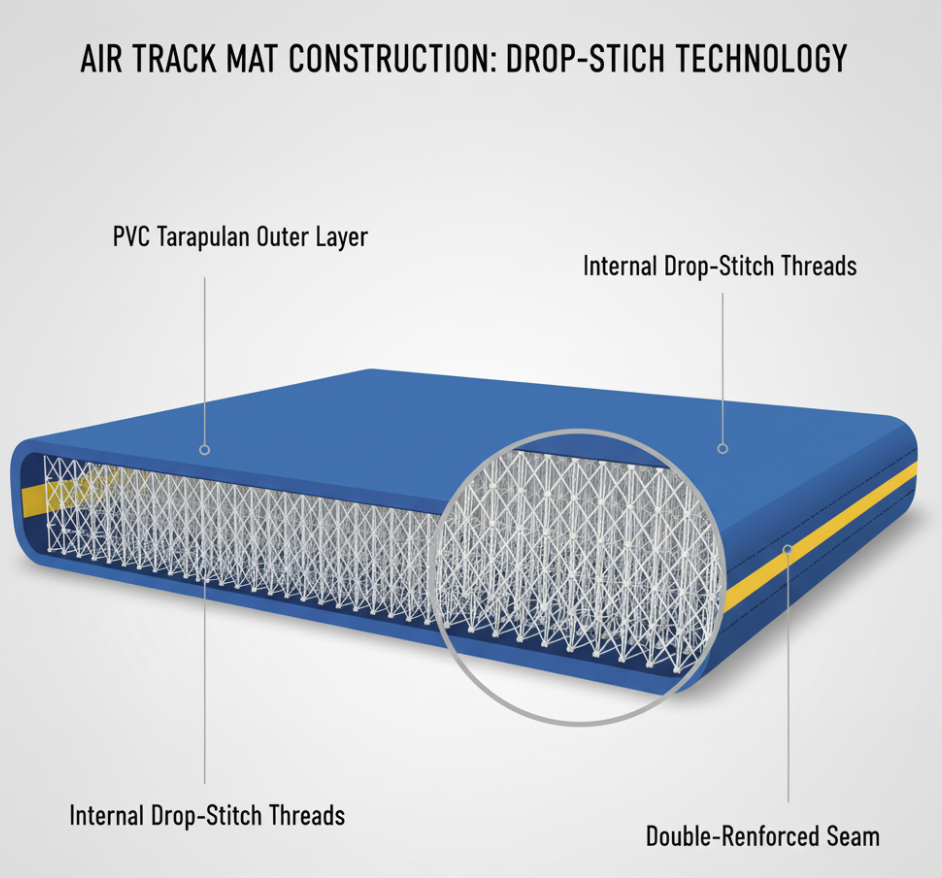
No two athletes train the same way. Beginners need softer landings to build confidence, while advanced athletes may require firmer surfaces to perfect their tumbling or jumps. With air track mats, pressure can be adjusted using an electric pump in under a minute.
This adaptability allows gyms and training centers to cater to a wide spectrum of clients with a single piece of equipment. For B2B buyers, it reduces the need to purchase separate mats for different levels — another hidden way air tracks maximize cost efficiency.
Unlike foam mats, which are often limited to gymnastics or martial arts, air track mats are highly versatile. They’re used for:
Cheerleading practice
Parkour and tricking
Yoga and pilates
Martial arts drills
Physical therapy and rehab
For gyms and distributors, this multi-purpose nature means a wider audience and more revenue streams. Instead of purchasing separate gear for each activity, one investment covers multiple training disciplines.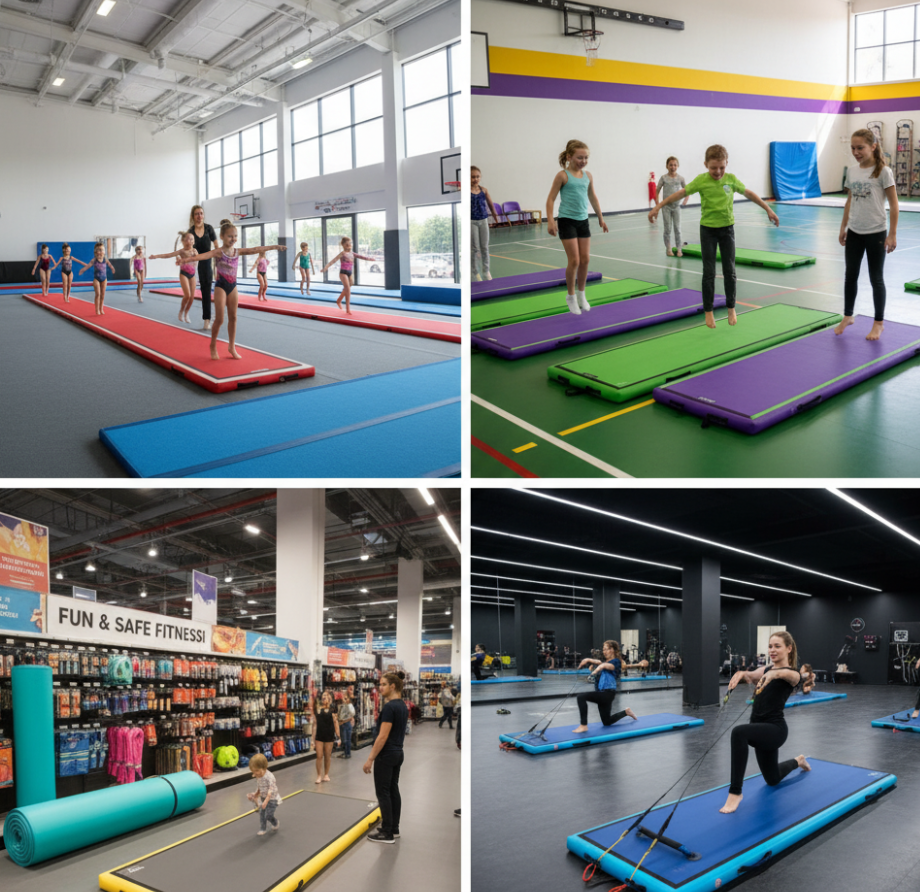
Maintenance is often overlooked in buying decisions but can become a hidden cost over time. Foam mats absorb sweat, dirt, and odors, making them difficult to clean and less hygienic. Air track mats, on the other hand, feature non-porous PVC surfaces that wipe clean in seconds with disinfectant.
This saves gyms valuable time on cleaning, reduces overhead costs, and ensures a consistently professional training environment. For B2B buyers, low-maintenance equipment translates into long-term operational savings.
Clients instantly notice when a facility is equipped with modern, high-quality gear. Air track mats project professionalism, innovation, and care for athlete safety. This builds client confidence, improves customer retention, and helps attract new memberships.
For B2B buyers like distributors, stocking premium products creates a strong market advantage. Gyms that see your products in action will associate them with modern training standards and be more likely to place bulk orders.
Middlemen add costs, delays, and complexity. By working directly with manufacturers, B2B buyers gain factory-direct pricing, ODM customization options, reliable supply chains, and priority in bulk orders.
This model not only reduces costs but also allows buyers to develop long-term partnerships with trusted suppliers. For distributors, it ensures access to scalable solutions that can grow alongside market demand. For gyms, it guarantees steady supply and consistent quality.
For gyms, schools, and distributors, the choice is clear: air track mats outperform traditional foam mats in every critical area — safety, durability, cost efficiency, and versatility. Bulk buying and customization further enhance ROI, making them a strategic investment for long-term success.
👉 If you’re a B2B buyer ready to upgrade your facility or expand your distribution line, explore our customize air tracks options today. Let’s discuss how bulk supply can give your business a lasting competitive edge.
Q1: Are air track mats suitable for professional gyms?
Yes, they are widely used in gymnastics, cheerleading, martial arts, and fitness centers worldwide due to their safety and versatility.
Q2: How long does an air track tumbling mat last?
With proper care, high-quality air track mats last 5–7 years, far longer than most foam mats.
Q3: Can I order custom branding on air track mats?
Absolutely. Logos, colors, and dimensions can be customized to fit your brand. Learn more at customize air tracks.
Q4: What is the minimum bulk order for B2B buyers?
Minimums vary depending on size and customization, but factory-direct supply offers flexible options for gyms and distributors.
Q5: How do air track mats compare in cost to foam mats?
While the upfront cost may be slightly higher, their longer lifespan, lower maintenance, and bulk-buy discounts make them significantly more cost-effective long term.
Would you like me to turn this enriched listicle into a content series (e.g., “Top Benefits for Schools,” “Why Distributors Should Stock Air Track Mats,” etc.), so you have multiple posts targeting different B2B segments?


![What Is an Air Track in Gymnastics? [Complete Guide]](http://ueeshop.ly200-cdn.com/u_file/UPBF/UPBF509/2605/13/photo/WhatIsanAirTrackinGymnastics.png)


