Are air tracks waterproof? Yes, commercial-grade air tracks are 100% waterproof and can be safely used in pools or outdoors. Premium mats are constructed from marine-grade PVC tarpaulin with high-frequency heat-welded seams, making the airtight core completely impermeable to water. However, the mat must be thoroughly towel-dried before deflation and storage to prevent exterior mold growth.
How to safely dry a wet air track in 4 steps:
Table of Contents
Your clients want to know if they can drag their tumbling mat onto the wet grass or throw it into the swimming pool. The short answer is yes. But if you run a gymnastics facility or distribute sporting goods, the short answer isn't good enough.
When water enters the equation, the actual build quality of the mat is instantly put to the test. Expose a cheaply made mat to moisture, and you will face peeling seams, toxic mold, and an avalanche of refund requests.
Water resistance isn't a feature you can just slap on a label. It is an engineering standard. If you are buying in bulk, understanding exactly how an air track manufacturer achieves this waterproofing is the difference between a highly profitable product line and a customer service nightmare.
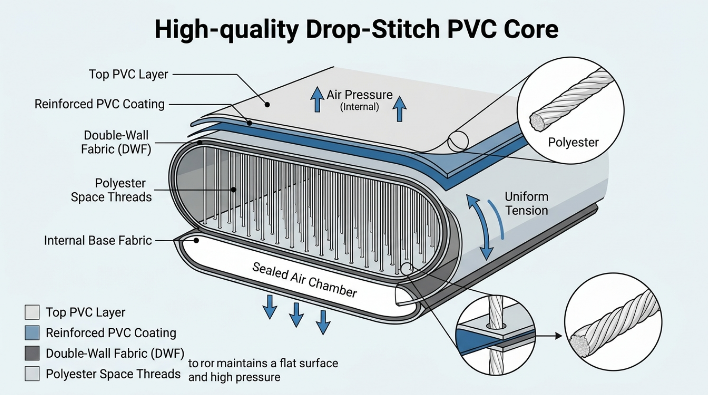
To understand why some mats survive the pool and others pop, you have to look at the raw materials. A reputable factory direct supplier will be transparent about their bill of materials.
The outer shell of a commercial-grade track is made from PVC tarpaulin. This is the exact same synthetic fabric used in rigid inflatable boats (RIBs) and premium stand-up paddleboards. It is inherently 100% waterproof. If you are leveraging OEM services to build your own brand, specify that you want 0.9mm or 1.2mm commercial-grade PVC. Anything thinner risks punctures, which immediately compromises the waterproofing.
Inside the mat lies the drop-stitch core—thousands of polyester threads bridging the top and bottom layers. This core is what keeps the mat perfectly flat instead of bulging like a balloon. Here is the catch: Water must never enter this core. If a faulty valve or a split seam allows water inside the drop-stitch chamber, the mat is virtually impossible to dry out completely. Internal mold will develop, weakening the threads until the mat eventually ruptures.
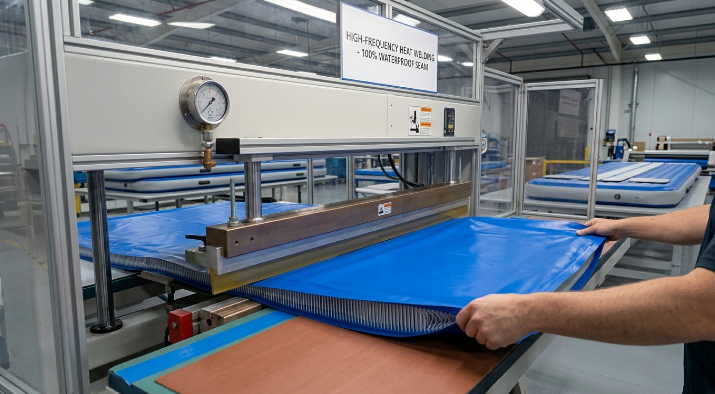
This is where the industry splits in two. If you take away one piece of information before placing a wholesale order, make it this. Most budget factories assemble their mats using PVC adhesive. A premier air track manufacturer abandons glue entirely for the main seams, utilizing High-Frequency (HF) Heat Welding.
For B2B buyers, understanding this technical difference is critical for protecting your profit margins:
| Specification | Glued Seams (Budget/Retail Grade) | Heat-Welded Seams (Commercial/OEM Grade) |
|---|---|---|
| Manufacturing Process | Hand-applied industrial PVC adhesive. | High-frequency electromagnetic energy melts layers together. |
| Water Resistance | Low to Medium. Glue degrades when soaked. | 100% Waterproof. Materials become a single piece. |
| Lifespan in Sun/UV | Adhesive softens and weakens under heat. | Immune to heat degradation; structurally permanent. |
| B2B RMA Risk | High. Frequent seam splitting and air leaks. | Extremely Low. Ideal for bulk distribution warranties. |
| Best Application | Cheap indoor home use only. | Commercial gyms, outdoor camps, and pool usage. |
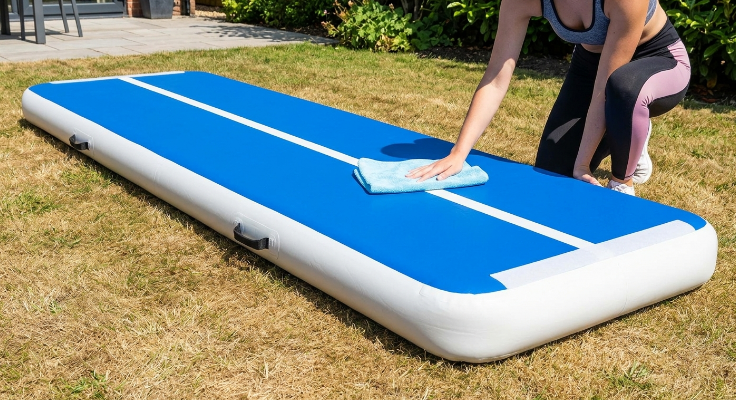
Even with the best heat-welded mat in the world, human error can ruin the product. As a B2B seller, you must educate your end-users to protect your margins from unwarranted returns.
Water on the outside of the mat is harmless. Rolling up a wet mat and shoving it into a dark closet is catastrophic. Within 48 hours, dark, deeply ingrained mold will bloom across the PVC.
Tell your customers to follow these strict rules:
If you are expanding your sporting goods catalog, don't just ask a supplier for their price list. Ask them about their engineering.
Whether you need off-the-shelf wholesale products or complex ODM (Original Design Manufacturing) solutions for a custom product line, you need a partner who builds for durability.
Ask these three questions to your potential supplier:
By cutting out the middlemen and going factory direct, you gain control over these exact specifications, ensuring the products bearing your logo can handle the elements without failing your customers.
1.Can you leave an air track out in the rain?
--Yes, leaving an air track in the rain temporarily will not damage the PVC material, provided the inflation valve is securely closed. However, it should not be left outdoors permanently. Prolonged exposure to UV rays and extreme temperature shifts will eventually fade the material and stress the seams. Always dry the mat completely before storing it.
2.Are air tracks safe to use in a swimming pool?
--Absolutely. Because of their airtight drop-stitch construction, commercial-grade air tracks are incredibly buoyant and make excellent floating platforms. Just ensure the mat features heat-welded seams, as prolonged submersion will dissolve the cheap adhesives used on lower-tier mats.
3.How do you dry an air track that got wet?
--Leave the track fully inflated. Wipe down the entire surface, paying special attention to the edges and the crevice around the valve, using highly absorbent microfiber towels. Let it sit in a dry, well-ventilated area out of direct sunlight until all residual moisture is gone before rolling it up.


