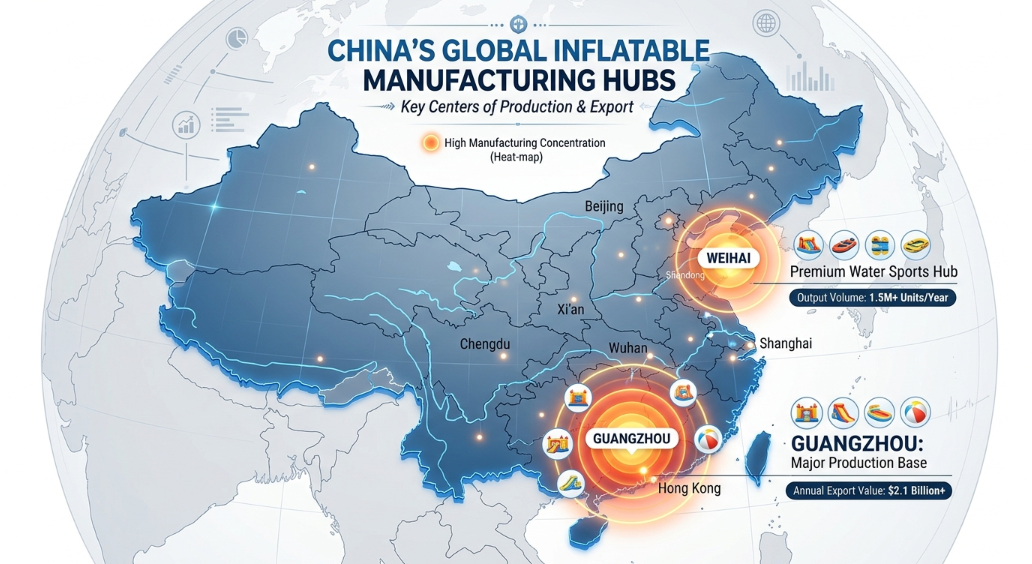
How important is factory location when importing inflatable wrestling mats from China? Factory location is critical because it determines your inland haulage costs and the quality of the local supply chain. The two primary hubs for inflatable mats are Guangdong (Guangzhou/Huadu) and Shandong (Weihai). Sourcing from these industrial clusters ensures access to specialized "Drop-stitch" fabric suppliers and experienced labor. Proximity to major ports like Nansha (Guangzhou) or Qingdao (Shandong) can save you $200–$500 per container in trucking fees and reduce transit times by 3–5 days compared to inland provinces.
Table of Contents
- Which Regions in China are Best for Inflatable Mat Manufacturing?
- Will Factory Location Affect Shipping Cost and Delivery Time?
- Should I Prioritize Coastal Factories for Export Efficiency?
- How Can I Verify the Actual Factory Address?
- Interactive Quiz: Regional Sourcing Mastery
- Conclusion
Which Regions in China are Best for Inflatable Mat Manufacturing?
When it comes to Inflatable Wrestling Mats, China has two "Powerhouses." If your supplier is located elsewhere, you should ask why.
- Guangdong Province (Guangzhou/Huadu/Foshan): This is the heart of the global inflatable industry. The supply chain here is unparalleled. From specialized UV-resistant PVC to high-pressure valves, everything is within a 50km radius. This "Industrial Clustering" allows for rapid prototyping and competitive pricing due to high local competition.
- Shandong Province (Weihai): Weihai is world-famous for its "Drop-stitch" fabric—the core material inside an Air Track. Many factories here evolved from the inflatable boat and paddleboard industry. If you are looking for high-end, military-grade durability, Weihai is often the top choice.
Claim: Over 85% of high-quality inflatable gymnastics mats exported to the US and Europe originate from either the Pearl River Delta (Guangdong) or the Weihai cluster.
Regional Comparison Table
| Feature |
Guangdong (Guangzhou) |
Shandong (Weihai) |
| Primary Strength |
Mass production & Variety |
High-end Drop-stitch technology |
| Closest Port |
Nansha / Yantian |
Qingdao / Weihai |
| Logistics Maturity |
Excellent (World-class) |
Good (Focused on North-East Asia/US) |
| Product Focus |
Mats, Castles, Advertising |
Air Tracks, SUPs, Boats |
Will Factory Location Affect Shipping Cost and Delivery Time?
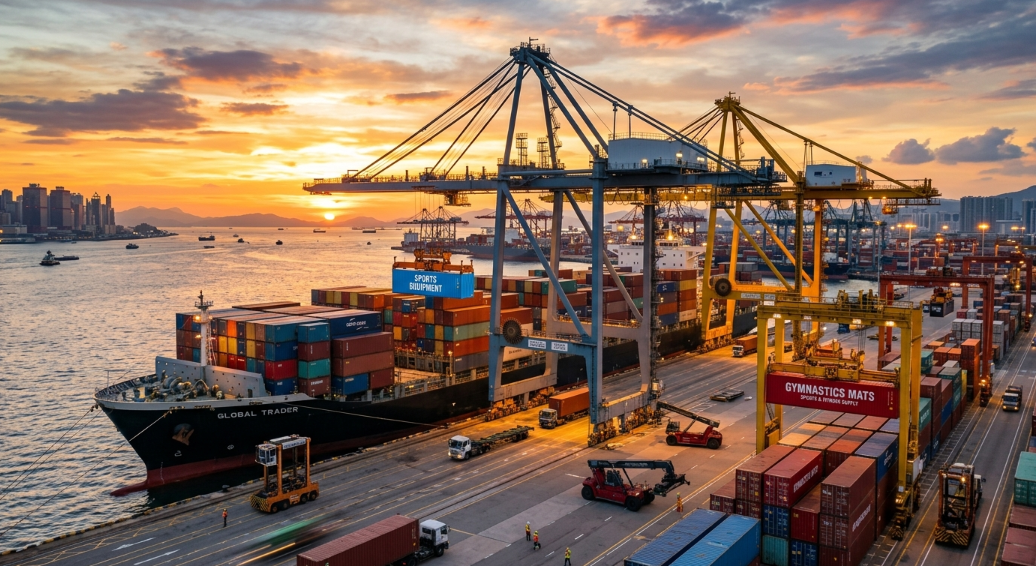
Absolutely. In the B2B world, we talk about Inland Haulage. If your factory is in an inland province like Henan or Sichuan to save on labor costs, you might pay an extra $600 for a truck to bring the container to a coastal port.
Furthermore, "Lead Time" isn't just about production. It's about the "Empty Container Release." In major hubs like Guangzhou, shipping lines have a massive surplus of empty containers. In remote areas, you might wait 3–7 days just for an empty container to arrive at the factory for loading.
For a specialized inflatable wrestling mat, the shipping volume (CBM) can be significant. Being close to a major hub means your goods are on the ship within 48 hours of leaving the warehouse.
Should I Prioritize Coastal Factories for Export Efficiency?
The short answer: Yes. For the inflatable industry, the "Labor Cost" advantage of inland China is usually negated by the "Logistics Friction." Coastal factories in Guangdong and Shandong are "Export-Oriented." Their staff understands FOB (Free On Board) terms, they have relationships with international freight forwarders, and they are accustomed to the strict quality standards of the EU and US markets.
However, keep an eye on Port Congestion. Sometimes, smaller ports near Weihai can be faster than the massive, often-congested ports in Shenzhen during peak seasons (like the pre-Christmas rush).
How Can I Verify the Actual Factory Address?
"Trust, but verify." Many trading companies use a prestigious office address in a CBD but have no physical factory. Here is how you uncover the truth:
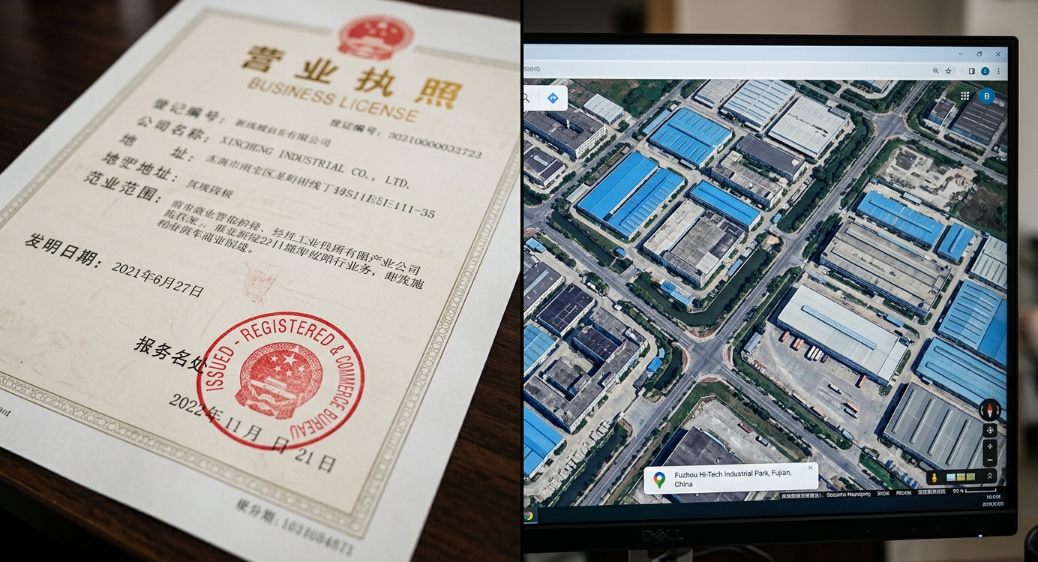
- Check the Business License: Look at the "Registered Address." If the address is a "Room 1205, [Name] Tower," it’s an office. A factory address will usually look like "No. 8, [Name] Industrial Zone."
- Request the "Pickup Address" for a Sample: Ask for a small sample and tell them your courier (DHL/FedEx) will pick it up. If the pickup address is different from their listed "factory," they might be outsourcing.
- Baidu Maps (Street View): While Google Maps is limited in China, use Baidu Maps or Amap (Gaode). Drop the pin on their address. If you see a factory gate with their sign, you’re in business.
Expert Insight: Always check the Tax Registration Number. The first few digits often identify the specific district where the company is registered, allowing you to cross-reference their claims
Interactive Quiz: Regional Sourcing Mastery
Scenario: You need a 20ft container of custom-branded wrestling mats delivered as fast as possible to Los Angeles. Which supplier choice is most logical?
- A. A factory in Tibet with the lowest unit price.
- B. A trading company in Shanghai with a fancy showroom.
- C. A manufacturer in Guangzhou located 40km from Nansha Port.
- D. A small workshop in rural Anhui province.
Answer: C is the winner! You get the cluster expertise and the lowest inland logistics friction.
Conclusion
In the inflatable industry, Geography is Destiny. By focusing your search on the Guangdong and Shandong clusters, you tap into a decades-old ecosystem of quality and efficiency. Don't let a low "Ex-factory" price from a remote province lure you into a logistical nightmare.
References
- World Bank: Logistics Performance Index (LPI) - China Analysis [^1]
- China Customs Statistics: Export Trends in Sports Goods and Inflatables 2025 [^2]
- Global Sources: Sourcing Guide: Inflatable Sports Equipment Clusters [^3]


