Blow-up gymnastics mats, or air tracks, are professional-grade inflatable tumbling surfaces offering superior shock absorption and bounce. They are a versatile and safe training solution for a wide range of athletic disciplines, making them an essential investment for gyms, training centers, and sports equipment distributors looking to enhance their offerings and meet market demand.
Table of Contents
Part 1: The Basics
Part 2: Choosing the Right Mat
Part 3: Making the Purchase
Part 4: FAQs
A decision to invest in new gym equipment is a critical step for any business, whether you are a gym owner aiming to improve safety and appeal to new clients, or a distributor seeking a reliable product to expand your catalog. As you navigate the wholesale market for blow-up gymnastics mats, you're not just buying a product; you're investing in a solution that can elevate your business. The right air track offers unparalleled versatility, superior safety for athletes, and the durability required for intensive commercial use. Beyond standard sizes, many clients look to customize air tracks to perfectly fit their unique training spaces and branding requirements, ensuring a seamless and professional integration into their facilities.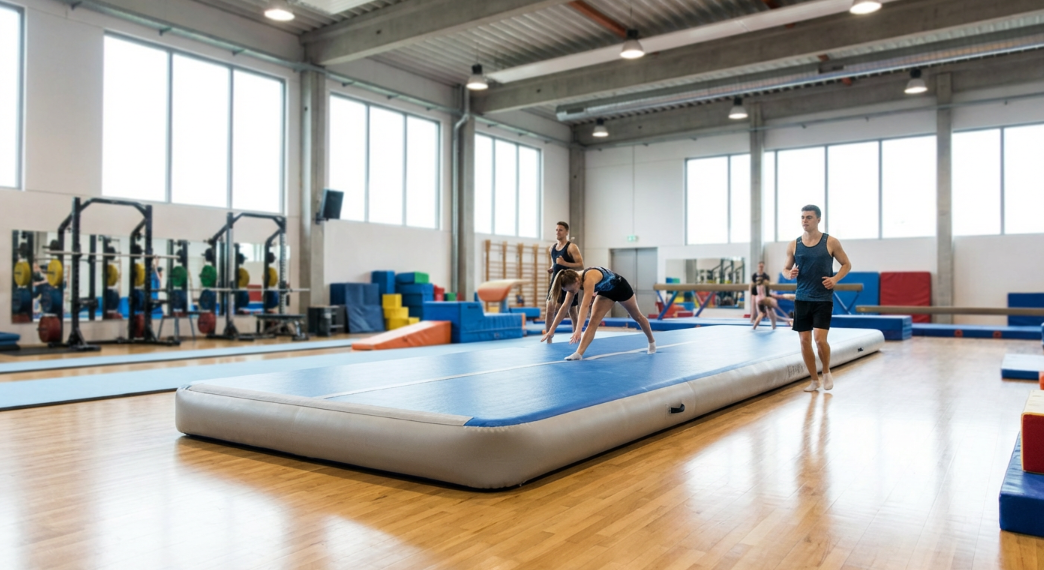
From a business perspective, an air track is a strategic asset. It's a professional-grade, inflatable training surface designed with precision to serve as a portable and high-performance alternative to traditional spring floors and foam mats. They are rapidly becoming an essential piece of equipment for modern facilities.
The benefits are directly tied to your operational needs and business goals:
Safety and Liability Reduction: The adjustable air pressure allows for a customized firmness, providing optimal shock absorption. This minimizes the risk of common stress injuries to an athlete's ankles, knees, and wrists. For gym owners and coaches, this translates into a safer training environment, lower liability, and enhanced peace of mind.
Space Optimization and Operational Efficiency: In multi-purpose facilities, every square foot matters. Unlike bulky foam mats, air tracks can be inflated in minutes and, just as quickly, deflated and stored away. This flexibility allows you to easily transform a space for different classes or events, maximizing your facility's utilization.
Attracting and Retaining Clients: Today's clients are looking for state-of-the-art equipment that demonstrates a commitment to quality and safety. Offering an air track can give your business a significant competitive edge, appealing to high-level athletes while providing a safe, fun, and dynamic training environment for beginners.
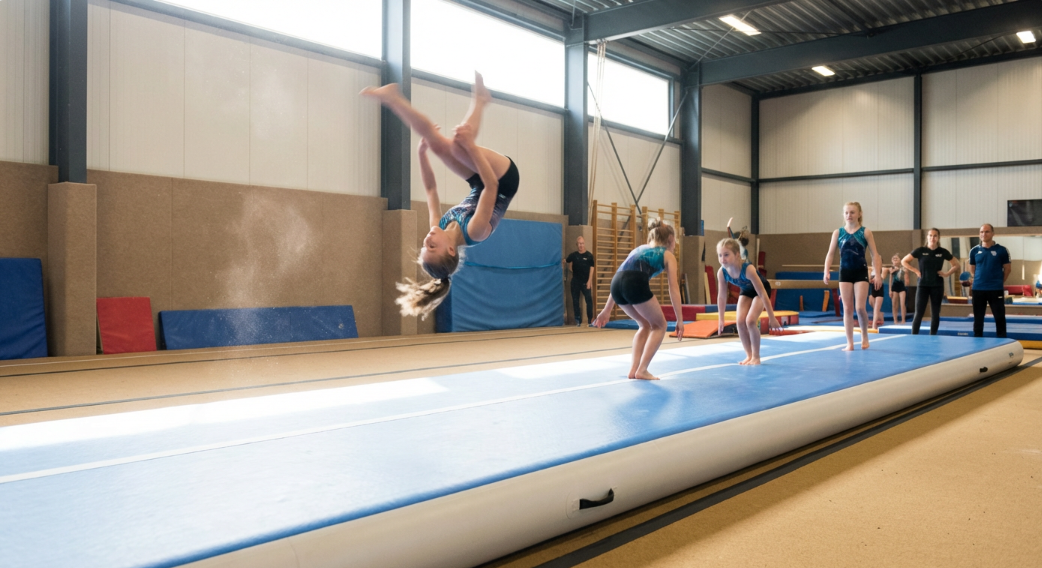
Broad Versatility: An air track is not limited to a single sport. Its design makes it an ideal training surface for gymnastics, cheerleading, parkour, acrobatics, and even martial arts. This versatility allows you to expand your programming and cater to a wider client base, driving revenue growth.
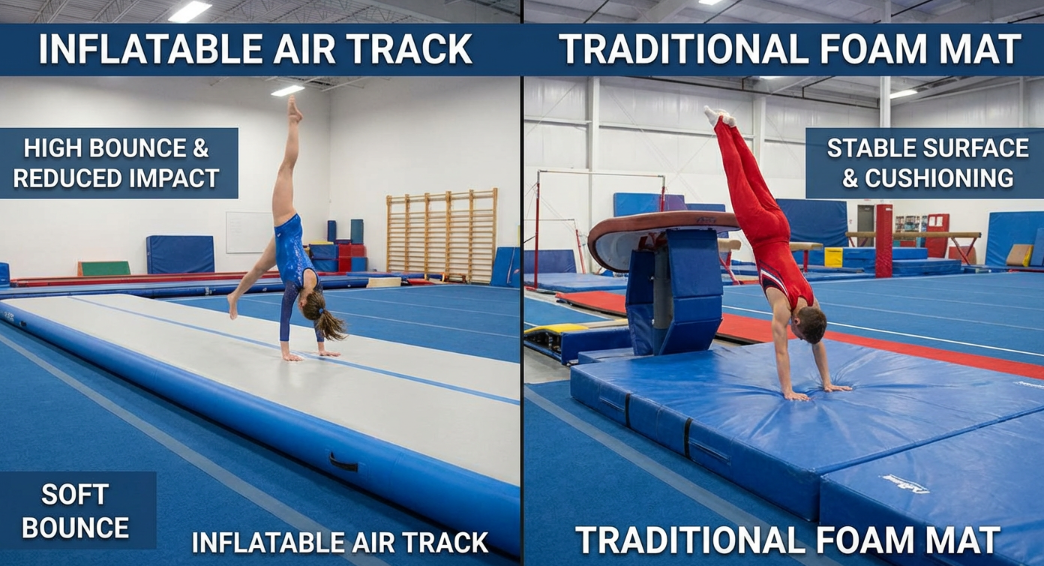
When making a bulk purchase, it’s essential to understand the fundamental distinctions between these two types of equipment. While both serve a purpose in a gym, their functional and logistical differences directly impact your operational efficiency and return on investment.
| Feature | Air Track (Inflatable Mat) | Traditional Gymnastics Mat (Foam) |
|
Performance & Rebound |
Provides a dynamic, spring-like bounce that accelerates tumbling progression and reduces joint impact. |
Offers a stable, firm surface for foundational skills, landings, and floor exercises. |
|
Portability & Storage |
Deflates and rolls into a compact bag, allowing for effortless transport and minimal storage space. |
Bulky, heavy, and requires a dedicated, permanent space, limiting its use in multi-purpose areas. |
|
Versatility |
Excellent for explosive tumbling, flips, and high-impact routines. The adjustable firmness suits a wide range of skill levels. |
Best suited for basic floor routines, stretching, and low-impact drills. Less dynamic for advanced acrobatics. |
|
Material & Durability |
Constructed from reinforced, professional-grade Double Wall Fabric (DWF) designed for continuous, high-intensity commercial use. |
Typically made of closed-cell foam with a vinyl cover, prone to compression over time with heavy use. |
|
Longevity & ROI |
Built for commercial durability, offering a long service life with proper care and repair. Its versatility provides a high return on investment. |
Can degrade with heavy use, potentially requiring more frequent replacement, especially in high-traffic commercial environments. |
For any commercial buyer, the composition of a product is a direct indicator of its value and long-term viability. The durability of an air track is not just a feature; it's a critical component of your investment.
Professional-grade air tracks are almost exclusively made from two key materials:
Double Wall Fabric (DWF): This is the core of the air track's structural integrity. DWF consists of thousands of finely woven polyester threads that connect the top and bottom layers of the mat. When inflated, these threads create a perfectly flat, stable, and rigid surface that performs like a traditional spring floor. The density and quality of this drop-stitch material are what separate a consumer-grade mat from a durable, commercial-grade product.
Reinforced PVC Tarpaulin: This is the outer shell of the mat. A high-quality air track uses a heavy-duty PVC tarpaulin (often 1.2mm or thicker) that is UV-resistant, puncture-proof, and designed to withstand the abrasive friction of commercial use. The seams are not simply stitched but are heat-welded to create an airtight, robust seal that can endure repetitive high-impact landings.
The combination of these two materials ensures the durability required for continuous, high-volume use in a commercial setting. When evaluating suppliers, inquire about the material specifications and manufacturing process. A transparent supplier will provide details on the DWF thread count and PVC thickness, as these are the primary indicators of a mat's longevity and ability to maintain its performance over thousands of training sessions.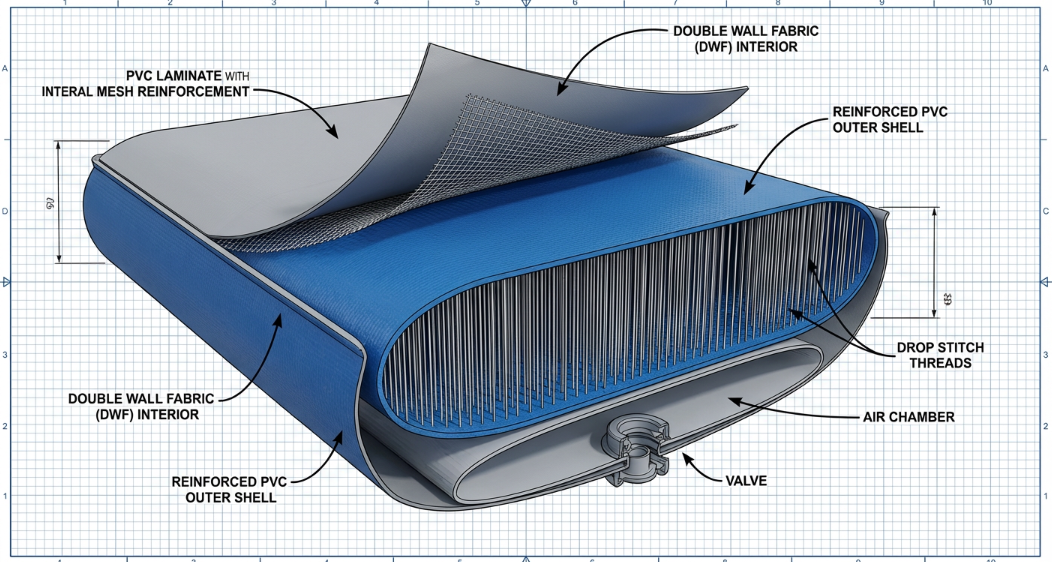
Selecting the right dimensions for a commercial air track is a strategic decision that impacts the safety, versatility, and efficiency of your facility. The ideal size and thickness are not one-size-fits-all; they depend on your available space, the primary activities you will host, and the skill level of your clientele.
Thickness: The Key to Versatility
10cm (4-inch) Thickness: This is a common entry-level thickness. It provides a firm, stable surface that closely mimics a traditional gymnastics floor. It’s excellent for foundational skills, stationary drills, and for more advanced athletes who want a firm surface for precision. However, it offers less bounce and can be more unforgiving on landings for beginners.
20cm (8-inch) Thickness: This is the most popular and versatile thickness for commercial use. The greater volume of air allows for significant air pressure adjustment. At high pressure, it can be firm like a traditional floor; at lower pressure, it provides a much bouncier, spring-like surface. This versatility makes it ideal for a wide range of skills, from beginner tumbling to advanced aerial tricks, as it offers a more forgiving surface for high-impact landings.
25cm (10-inch) or Thicker: While less common, these mats are designed for advanced power tumbling, parkour, and acrobatics. They provide maximum bounce and shock absorption, making them a good fit for specialized training centers or for athletes looking to perfect complex, high-rebound skills.
Length and Width: Maximizing Your Training Space
Length: The length of your air track should be dictated by the types of passes your athletes will perform.
3-4 meters: Suitable for individual skills, static drills, and short, single-trick passes (e.g., a single back handspring or flip).
5-8 meters: This is the standard commercial length. It is sufficient for practicing most connected tumbling passes like a round-off into a back handspring or a series of flips.
8+ meters: Ideal for high-level athletes and professional facilities that require a full tumbling run with multiple connected skills and a generous landing area.
Width: The width is crucial for safety, especially for younger or less experienced athletes.
1 meter: A standard width that requires precise tumbling.
2 meters: A wider mat provides a more forgiving and safer landing zone, making it an excellent investment for facilities that serve a mix of skill levels, from beginners to advanced students.
By carefully considering your business’s specific needs against these sizing and thickness options, you can make an informed decision that enhances your facility's safety, client appeal, and operational success.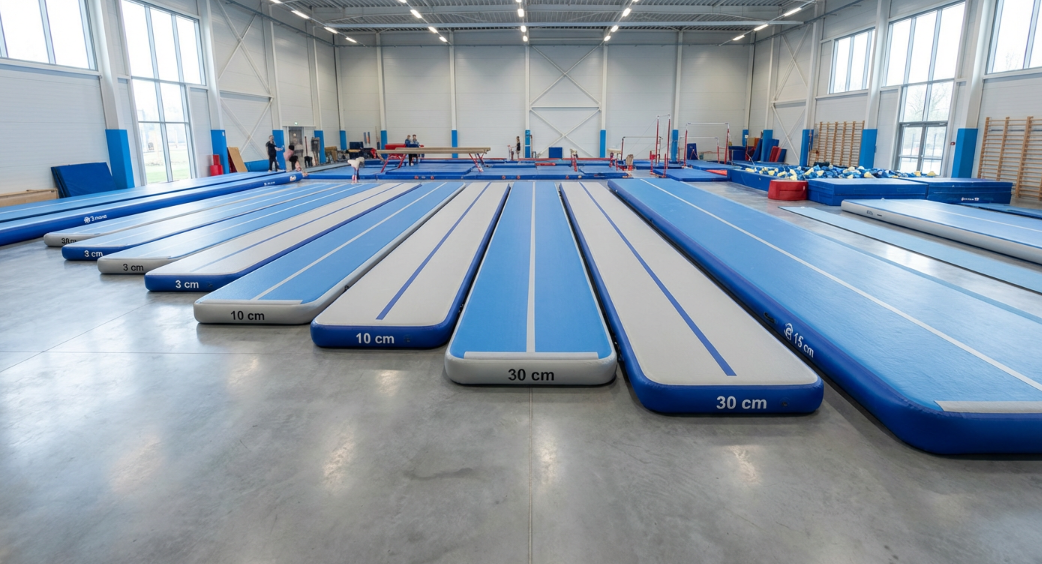
The convenience of a professional-grade air track lies in its rapid setup and takedown, a crucial factor for multi-purpose gyms and mobile training businesses. The process is simple and efficient when you use the correct equipment.
Inflation:
Connect the pump: Attach the hose from the electric air pump to the mat's valve.
Turn on the pump: The pump will rapidly fill the mat with air. This process typically takes only a few minutes, even for a large track.
Adjust the pressure: Once the mat is firm, use a pressure gauge (often included with the pump) to check the PSI. Adjust the air pressure to achieve the desired firmness. A firmer surface (higher PSI) is better for spring-like bounce and advanced skills, while a softer surface (lower PSI) provides more cushion for beginners.
Deflation:
Open the valve: Simply open the mat's air valve. The mat will begin to deflate on its own, but this can take some time.
Use the pump's deflate function: For a much faster and more thorough deflation, reconnect the electric pump and use its "deflate" setting. The pump will vacuum all the air out of the mat, making it much easier to roll up and store compactly.
Using a high-quality electric pump is essential for business efficiency. It ensures your training space can be set up and packed away in a matter of minutes, minimizing downtime between classes or events and freeing up valuable floor space. The portability and ease of use are key advantages for any business looking to maximize its operational flexibility.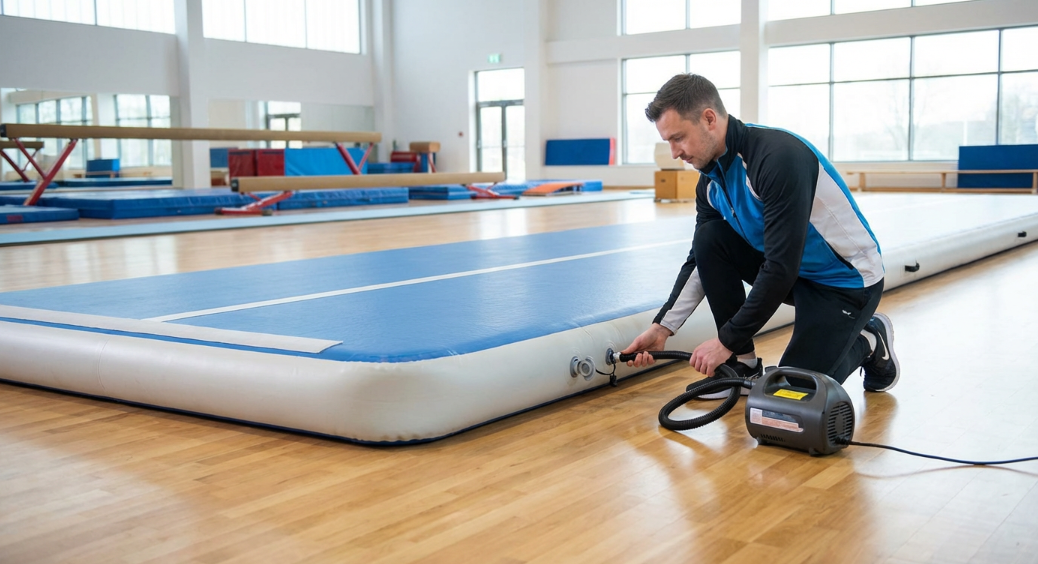
The portability of an air track makes it a tempting choice for outdoor use, whether for a temporary pop-up event or an outdoor training camp. While the mats are durable, their use on surfaces like grass, asphalt, or concrete requires careful consideration and specific precautions to protect your investment.
Using on Grass:
Using an air track on grass is generally safe and a popular option, as the soft surface provides a good foundation. However, there are two key precautions to take:
Remove all debris: Before unrolling the mat, thoroughly inspect the area and remove any sharp objects such as small rocks, sticks, or other debris that could puncture the mat.
Use a protective underlayment: To provide an extra layer of defense and extend the mat's lifespan, place a groundsheet, tarp, or even blankets underneath the mat. This barrier prevents small, unseen sharp objects from causing damage and protects the mat's surface from abrasion.
Using on Concrete or Hard Surfaces:
While air tracks can technically be used on concrete or asphalt, it is strongly recommended to use a protective underlayment at all times. The abrasive nature of these surfaces can cause friction that wears down the PVC material over time. A thick tarp or a dedicated protective ground cover is essential to prevent this kind of wear and tear, safeguarding your investment from premature damage.
Impact of Sun and Temperature:
One of the most important considerations for outdoor use is the effect of sunlight and temperature on the mat's air pressure. Hot temperatures can cause the air inside the mat to expand, leading to a significant increase in internal pressure. If left unattended, this can over-pressurize the mat and potentially damage the seams.
Regularly check pressure: If the mat is in direct sunlight, regularly check the air pressure and release a small amount of air as needed to prevent over-inflation.
Avoid prolonged exposure: Do not leave the mat out in the sun for extended periods, especially on hot days. When not in use, it should be deflated and stored in a cool, shaded area.
By following these simple but critical guidelines, you can safely and effectively expand the use of your air tracks beyond the gym floor, offering flexible training options while protecting your equipment.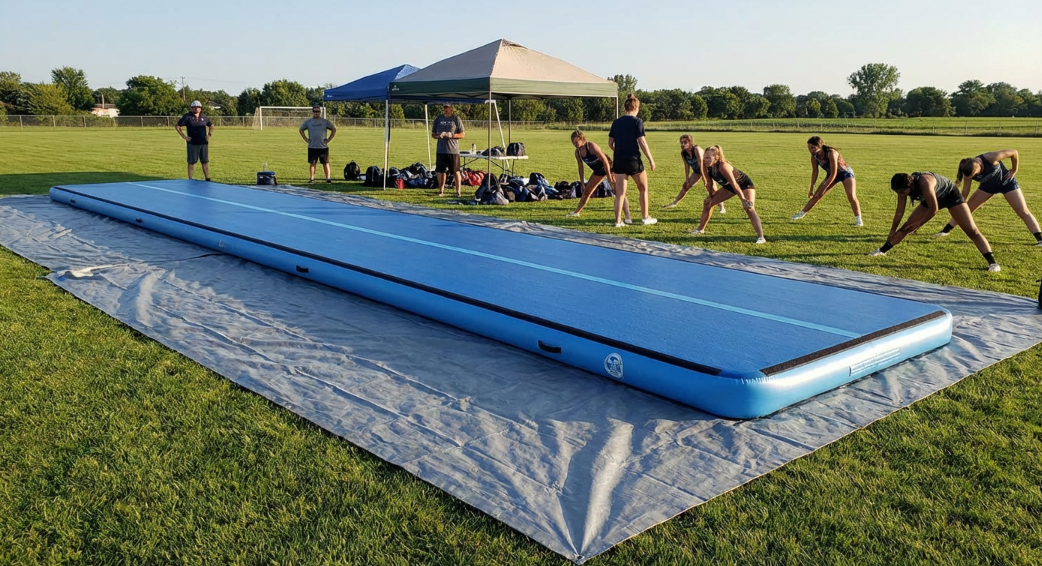
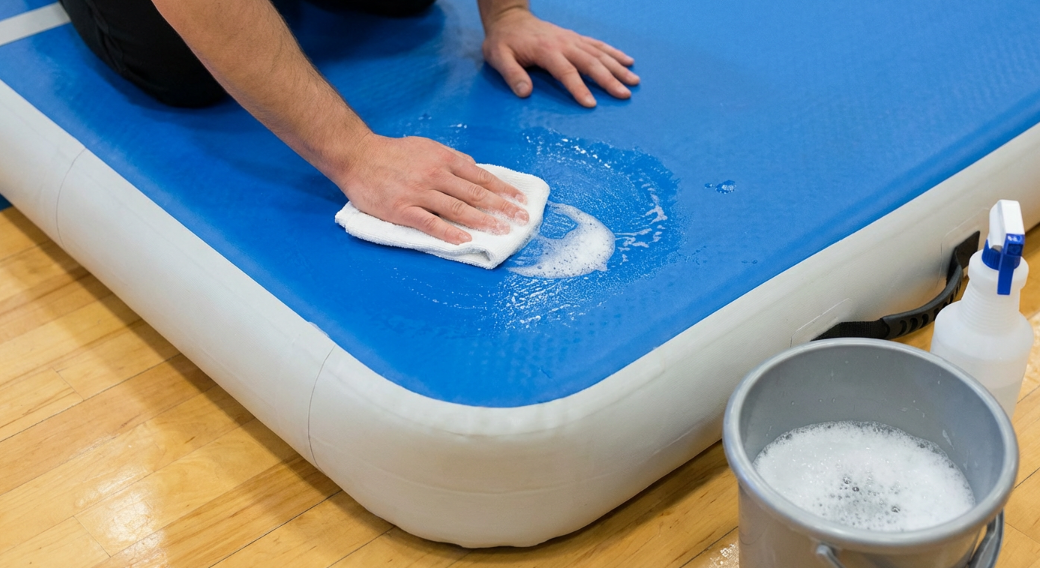
For any commercial investment, proactive maintenance is the key to ensuring longevity and a strong return on investment. With an air track, this is a straightforward process that not only protects the mat's material but also ensures a clean, sanitary training surface for your clients.
Routine Cleaning:
Daily or weekly cleaning is essential to remove dirt, sweat, and residue that can accumulate from regular use.
Simple is best: Use a soft, damp cloth with a mild soap and warm water. Wipe down the entire surface of the mat, including the seams. This is effective for general cleaning and won't damage the professional-grade materials.
Avoid harsh chemicals: Never use industrial cleaners, abrasives, or harsh chemicals. These can degrade the PVC material and weaken the heat-welded seams, which can compromise the mat’s structural integrity over time.
Pre-Storage Care:
Before deflating and storing the mat, a crucial step is to ensure it is completely dry.
Dry thoroughly: After cleaning, let the mat air dry completely. If you are storing it immediately after use, a clean, dry cloth can be used to wipe away any moisture. Rolling up a damp or wet mat can lead to the growth of mold and mildew, which can cause permanent damage and an unpleasant odor.
Proper Storage:
When the mat is not in use for an extended period, proper storage is essential.
Deflate and roll: Always store the mat fully deflated and neatly rolled up. This protects the material from stress and minimizes the risk of damage.
Choose a cool, dry place: Store the rolled mat in its carrying bag in a cool, dry location, away from direct sunlight, extreme heat, or any sharp objects. Proper storage prevents material degradation and keeps the mat in excellent condition, ready for its next use.
When sourcing an air track, it's important to know what is typically included in a standard package and what you may need to purchase separately. High-quality commercial bundles often come with essential accessories that are critical for your business operations.
Common accessories include:
Electric Pump: This is the most crucial accessory. A powerful electric pump is the heart of the air track's convenience, allowing for rapid inflation and deflation in just a few minutes. Many pumps also feature a "deflate" function, which is a key time-saver for packing away the mat.
Repair Kit: A repair kit is a non-negotiable accessory for any business relying on inflatable equipment. It typically includes a few patches of PVC material that match the mat's color and a tube of specialty glue. This allows for quick, on-site repairs of minor punctures, ensuring minimal downtime.
Carrying Bag: For businesses that transport their equipment, a durable carrying bag is essential. It protects the deflated, rolled-up mat from damage during transport and makes storage and handling much more manageable.
Valve and Hose Connectors: The pump's hose often comes with a variety of nozzles to ensure a secure, airtight connection to the mat's valve. Some kits also include a valve key, which can be used to tighten or replace the valve itself.
While some suppliers offer these as a complete bundle, others may sell them a-la-carte. When comparing quotes, ensure you have a clear understanding of which accessories are included in the price.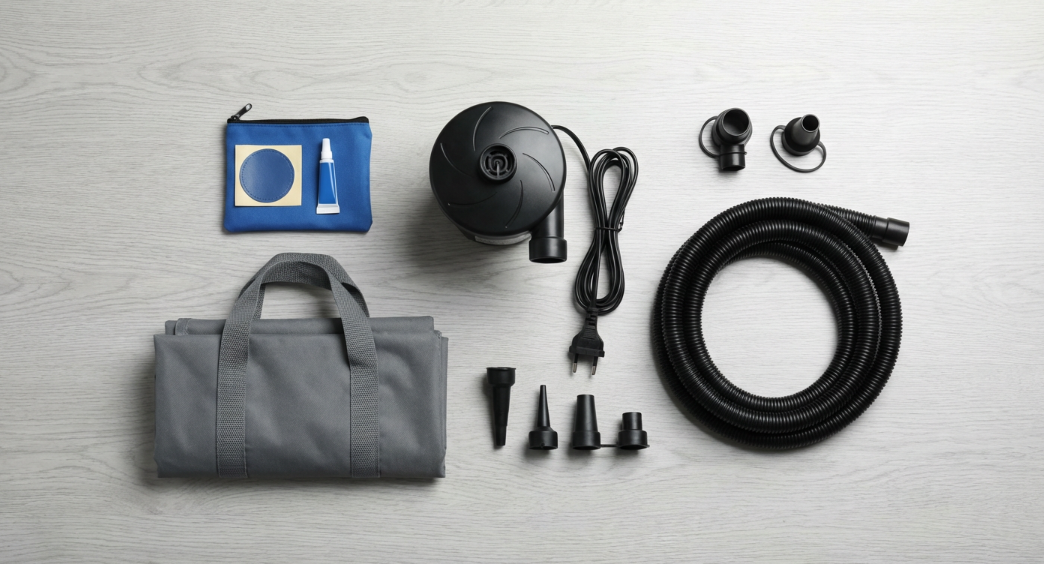
The durability of a professional-grade air track is exceptional, but accidents can happen. Fortunately, most minor punctures are easy to repair, ensuring your investment remains in service for years.
The process is straightforward:
Locate the Leak: Fully inflate the mat. If the leak isn't obvious, you can use a spray bottle filled with a mixture of soapy water. Lightly mist the surface of the mat, and watch for bubbles to appear. Bubbles will form directly over the source of the leak, making it easy to spot.
Clean and Prepare: Once the leak is found, fully deflate the mat. Use a clean, dry cloth to wipe the area around the hole, ensuring it is free of dirt, dust, and moisture.
Apply the Patch: A repair kit will contain a patch and a strong adhesive. Cut the patch into a circle with rounded edges, making sure it is at least an inch larger than the hole on all sides. Apply a thin, even layer of the adhesive to both the patch and the area around the hole on the mat.
Cure and Test: Firmly press the patch onto the mat, smoothing out any air bubbles. Place a heavy object on top of the patch to apply pressure and allow the glue to cure, which can take up to 24 hours. After the curing time, inflate the mat and check to see if the leak has been successfully sealed.
Knowing how to perform these simple repairs in-house saves you time and money, ensuring your training equipment is always ready for use.
Choosing a supplier is a critical business decision that goes beyond just the product. While there are many brands available, the "best" one is the one that meets your specific commercial needs and offers a high level of transparency and support.
When evaluating suppliers, consider the following:
Manufacturing and Materials: Look for manufacturers who are transparent about their materials, specifically the DWF thread count and the thickness of the reinforced PVC. These details are the true indicators of a mat's durability and longevity.
Warranties and Support: A supplier who stands behind their product will offer a strong warranty that covers manufacturing defects. Inquire about their customer service and repair policies—having a reliable partner is essential for a smooth long-term relationship.
Customization Options: As highlighted in this guide, the ability to customize air tracks to specific dimensions, colors, or with your branding is a significant advantage. This ensures the equipment perfectly aligns with your facility's unique needs and professional aesthetic.
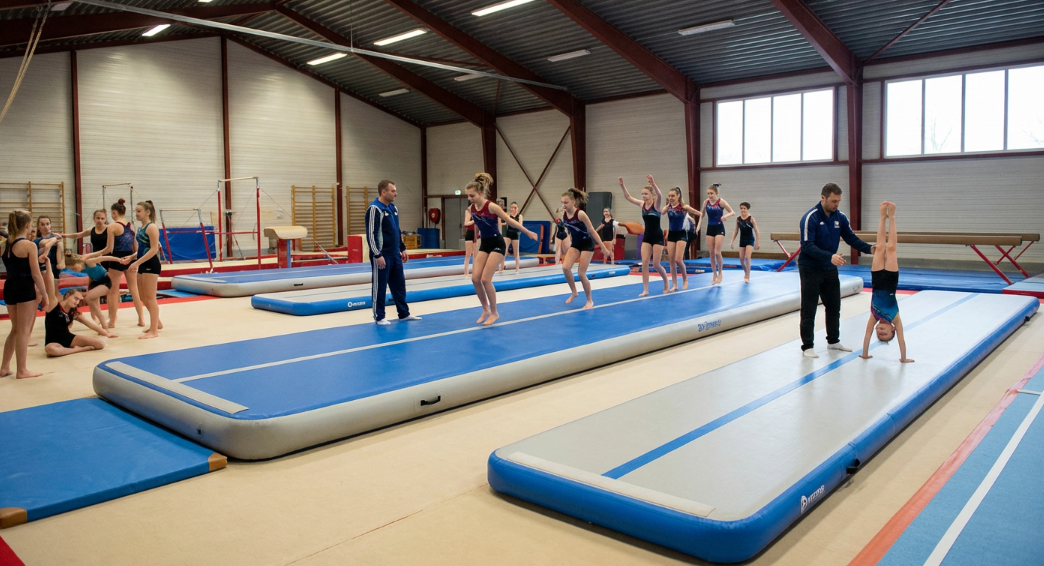
Professional-grade air tracks are engineered to support the weight of multiple athletes simultaneously. The structural integrity of the DWF material and the reinforced seams ensure they can handle high-impact landings and significant weight without issue. For specific limits, always refer to the manufacturer's specifications for the exact model you are considering.
A well-constructed, high-quality air track with a robust, airtight valve can stay inflated for several days to a week or more. The air pressure may decrease slightly over time, but it should not noticeably soften or become unusable within a single training session.
Yes, but with caution. As discussed in Part 2, it is highly recommended to use a protective underlayment, such as a thick tarp, to prevent the abrasive friction of hard surfaces from wearing down the PVC material.
It is generally not recommended to store the mat inflated for extended periods. Air pressure can fluctuate with temperature changes, and if left in a hot environment, the internal pressure can build up and potentially stress the seams. For long-term storage, it is always best to fully deflate the mat and store it in a cool, dry place.


![What Is an Air Track in Gymnastics? [Complete Guide]](http://ueeshop.ly200-cdn.com/u_file/UPBF/UPBF509/2605/13/photo/WhatIsanAirTrackinGymnastics.png)


